In this review
- Beats Solo 4 (Best Overall for Apple Households)
- Apple AirPods 4 with ANC (Upgrade Pick for Travel and Calls)
- Soundcore Q20i (Budget Pick)
- JBL Tune 510BT (Honorable Mention: The Sub-$40 Beater)
- Razer BlackShark V2 X (Honorable Mention: The Desk-and-Discord Pair)
- How They Separate
- Picking Between Them
The “everyday” bucket is three jobs stacked on top of each other and no single pair wins all three. Commute audio has to survive a loud subway car. Call audio has to let a coworker hear me without me apologizing. Desk audio has to stay comfortable from 9am to 6pm without my ears going numb. That is why there are five pairs on my shelf, and why I ended up on a Soundcore subreddit at 11pm running a crowdsourced EQ patch. The thread showed an FFT plot of the Q20i’s 2 kHz resonance peak (the latest OTA had not shifted it) and the replies were full of HearID calibration screenshots from different head geometries. Three people had independently landed on the same fix: drop 80 and 160 Hz by 2 dB, push 2 and 4 kHz up by the same amount. I ran it on my unit and the headphone went from bass-bloated to actually flat.
These five all sat on my head for at least a month each, across real commutes, real Zoom calls, and the slow grind of remote work. I have separate long-form reviews on every one. This guide is the “which one do I actually reach for” version, with the picks assigned to the jobs they do best.
One note on the field. There is a gaming headset in here, the Razer BlackShark V2 X, because plenty of readers spend four hours on Discord plus four hours on work calls from the same desk. I also resisted slotting in a flagship. No XM5, no AirPods Max, no Bose QC Ultra. Those are not “everyday” in the budget sense this guide is aimed at.
Beats Solo 4 (Best Overall for Apple Households)
Beats Solo 4 Wireless On-Ear Headphones
On-ear wireless with a Bluetooth 5.3 Class 1 radio, 50-hour battery, wired analog audio via the included 3.5mm cable, Personalized Spatial Audio with head tracking, and iCloud device handoff. No Active Noise Cancellation. Street price sits around $200.
The Solo 4 is the pair I grab when I leave the house and do not know how long I will be gone. The charger stopped coming on overnight trips two weeks in because 50 hours of measured runtime is long enough that a three-day trip does not require a top-up. Fast Fuel adds five hours from a ten-minute charge, which I triple-checked because I did not believe it.
What tips it into “best overall” for me is the wired passthrough. Plug the Solo 4 into a MacBook Pro with the included 3.5mm cable, and the Bluetooth codec drops out of the audio path entirely. The Dune score has air between the brass and the low synth bed that AAC compression was flattening. Wireless, the Solo 4 is a good Beats. Wired with that cable, it is a competent pair of on-ears that also happens to carry a week of battery.
The honest caveat. There is no ANC on the Solo 4. If you fly often or commute on loud transit, that will matter. Apple reserves ANC for the Studio Pro tier at $349. It still stings at $200 when the Sony WH-CH720N has working ANC at $150. Also no multipoint, so Android users get manual reconnects every time they switch devices. For an Apple household with light commute noise, the Solo 4 is the right call. For anyone else, keep reading.
Rating breakdown
Full breakdown in my Beats Solo 4 review.
Apple AirPods 4 with ANC (Upgrade Pick for Travel and Calls)
Apple AirPods 4 with Active Noise Cancellation
Open-fit wireless earbuds with Apple’s H2 chip, Active Noise Cancellation, Personalized Spatial Audio, Voice Isolation, Conversation Awareness, IP54 rating, USB-C and wireless charging case. About 5 hours per charge with ANC on, up to 30 with the case.
The AirPods 4 with H2 chip achieve roughly 60% noise reduction without a silicone seal, which most engineers would call physically improbable. There is no seal, so the H2 chip has to fight the full spectrum of ambient noise instead of only the frequencies leaking around a tip. I tested this on an A-train car at full speed: 78 dB of rumble dropped to 60 dB on my phone’s sound meter with ANC on. What the H2 chip is doing is running a 48 kHz adaptive filter on the feedforward mic signal, modeling the ear canal’s resonance profile and inverting the noise waveform at the driver before it reaches the eardrum. Without a seal, the feedforward mic is fighting the full ambient spectrum rather than just the leakage band that sneaks past a tip, and the DSP round-trip still stays inside the 10ms phase-coherence window where cancellation actually works. The filter degrades above 800 Hz, which is why voices and keyboard clicks still cut through cleanly.
Why this is the upgrade pick rather than best overall. Battery. Five hours with ANC on, four and a half at 60% volume in my testing. Samsung Galaxy Buds 3 Pro hit six. Sony WF-1000XM5 hit eight. On a cross-country flight, you are either turning ANC off in stretches or accepting a recharge stop in the case.
Call quality is the quiet win. Voice Isolation on the H2 chip runs a machine-learning model that strips background noise out of your voice in real time. I called my partner from the windiest corner I know, walking into a storm. She said it sounded like I was in a quiet room. For remote work, this is the pair that stopped me apologizing for being on earbuds during meetings. If you fly or commute in loud places, pay the premium for these over the Solo 4.
Rating breakdown
Full breakdown in my AirPods 4 ANC review.
Soundcore Q20i (Budget Pick)
Soundcore by Anker Q20i
Hybrid active noise cancelling over-ear with 40mm drivers, Bluetooth 5.0 multipoint, Soundcore app with custom EQ and HearID, up to 40 hours with ANC on or 60 hours off. USB-C fast charge, 3.5mm wired input. Model A3004. Street price around $50.
The Q20i is the pair that made me stop recommending a $150 ANC headphone to casual buyers. A colleague’s air purifier kicked into stage-three roar at 11pm, I had the Q20i on with nothing playing, and the 60-dB whirr collapsed into a faint hush. Pulled one cup off. Roar came back. Put it on. Hush. That is a pair of feedback microphones doing real work for $50.
The Q20i matches headphones three times its price in the low-frequency band. I measured roughly 20 to 25 dB of attenuation in the 100 to 400 Hz range against a pink noise source and a cheap calibrated mic. Cabin rumble on a 6-hour flight, HVAC drone, PC fan noise, road noise in a car. All knocked down. That is the frequency range that matters for travel.
The trade is above 1 kHz. Voices cut through. Keyboard clicks in a shared office come through clearly. The plastic build creaks if you flex it hard. The ear pads are protein leather and they trap heat past 90 minutes. The factory tune is bass-heavy with recessed mids, which you fix in the Soundcore app by dropping 80 Hz and 160 Hz a few dB and pushing 2 kHz and 4 kHz up by the same amount. Takes 90 seconds. Multipoint works. Battery holds 38 hours with ANC on. At $50, nothing else in this guide forgives a forgotten charger the way these do.
Rating breakdown
Full breakdown in my Soundcore Q20i review.
JBL Tune 510BT (Honorable Mention: The Sub-$40 Beater)
JBL Tune 510BT Bluetooth Headphones
On-ear Bluetooth 5.0 with 40mm drivers tuned to JBL’s Pure Bass profile, USB-C charging, physical buttons, and around 40 hours of battery. SBC codec only, no ANC. 160 grams. Street price around $40.
The Tune 510BT is the pair you buy instead of the Q20i if your budget is literally half. At $40 it became the default pair I grabbed on the way out the door, which surprised me more than anyone.
They do three things right at a price that forgives everything else. Battery hit 37 hours at 60% volume, closer to 42 on podcast volumes. USB-C charging, no proprietary cable. The three-button physical control cluster never misfires, which I say as someone who still misfires touch controls on a Live 660NC I borrowed from a friend. Physical buttons win.
What you give up is obvious. No ANC. SBC codec only, no AAC, no aptX. Multipoint is firmware-dependent and my unit does not expose it. The mic is fine for casual calls and terrible for professional use. At $40 for a pair that holds battery like this and stays out of your way, the math works. This is the second budget option because some readers do not have $50 and do need headphones.
Razer BlackShark V2 X (Honorable Mention: The Desk-and-Discord Pair)
Razer BlackShark V2 X Gaming Headset
Wired gaming headset with 50mm TriForce drivers, a HyperClear cardioid condenser boom mic, Flowknit memory foam cushions, and a single 3.5mm jack that works with PC, PS4, PS5, Xbox Series X and S, Switch, and anything else with a standard port. Weighs 240 grams. Around $50.
This is the gaming-adjacent pick for the reader who spends the day on Discord, team calls, or long raid sessions. The BlackShark V2 X is wired, not wireless, and it is a gaming headset, but it earns the spot because of two things: the Flowknit memory foam cushions, and the 240-gram weight.
I wear glasses. Most budget over-ear pairs start cooking my ears by the 90-minute mark because synthetic leather does not breathe. The Flowknit pads compress enough around my glasses arms to avoid the pressure point that made my old HyperX Cloud II a three-hour maximum. At 240 grams, the BlackShark is so light I have forgotten I was wearing it and stood up with the cable still attached. For reference, the SteelSeries Arctis 7P is 354 grams, the Logitech G Pro X is 320. That weight gap is load-bearing on a 4-hour work block.
The HyperClear mic is the quiet win for remote work. The cardioid pattern ignores my mechanical keyboard about 80% of the time, and a physical mute toggle on the left cup beats Discord’s software mute every time. The build is where the $50 price shows up. Plastic frame, non-detachable cable, non-detachable mic. If your desk life involves 6 hours of calls and light gaming, the BlackShark does more for your comfort than any $50 wireless pair.
Rating breakdown
Full breakdown in my Razer BlackShark V2 X review.
How They Separate
None of these five is trying to be a flagship, and none pretends to be one. The picks split along two axes: how much ambient noise you deal with daily, and how much of your day runs through calls.
Quiet commute, mostly home-office calls: Beats Solo 4. Fifty hours of battery, wired analog that improves the sound, Apple handoff across every device you own.
Loud transit, noisy call environments, or silicone tips that hurt after 90 minutes: AirPods 4 with ANC. Real low-end cancellation on an open fit, Voice Isolation that kills wind on calls, Apple pairing that is untouchable. Five hours per charge, so long travel days mean case stops.
$50 budget with real ANC on over-ears: Soundcore Q20i. $40 budget and you want the honest version of “headphones that just work”: JBL Tune 510BT. Four hours on Discord plus four hours on work calls from the same desk: Razer BlackShark V2 X.
Picking Between Them
Platform is the first filter. Anyone switching daily between an iPhone and a Windows laptop, or any two non-Apple devices, should skip the Solo 4 and AirPods 4 entirely. iCloud handoff and Apple auto-switching both drop the moment a non-Apple device enters the room. The Q20i is the only one here with real Bluetooth multipoint that just works across any two devices.
If you live inside Apple: Beats Solo 4 for light commute and the desk, AirPods 4 with ANC for loud transit and call-heavy days.
Cross-platform user or Android-primary: Soundcore Q20i for any budget that can reach $50.
Tightest budget with USB-C and real battery: JBL Tune 510BT.
Desk session longer than six hours with Discord and mechanical keys: Razer BlackShark V2 X. Flowknit pads and 240 grams make a category argument that wireless budget over-ears cannot touch on comfort.
For more headphone coverage, see our audio hub.
Also featured in
Related reviews
Beats Solo 4 vs AirPods 4 ANC vs Soundcore Q20i: A Three-Way Under-$200 Headphone Showdown
Three different bets under $200: on-ear Apple-adjacent, open-fit ANC earbud, budget over-ear ANC. Driver, codec, ANC, and price-per-feature tested.
 The Nerd Apr 18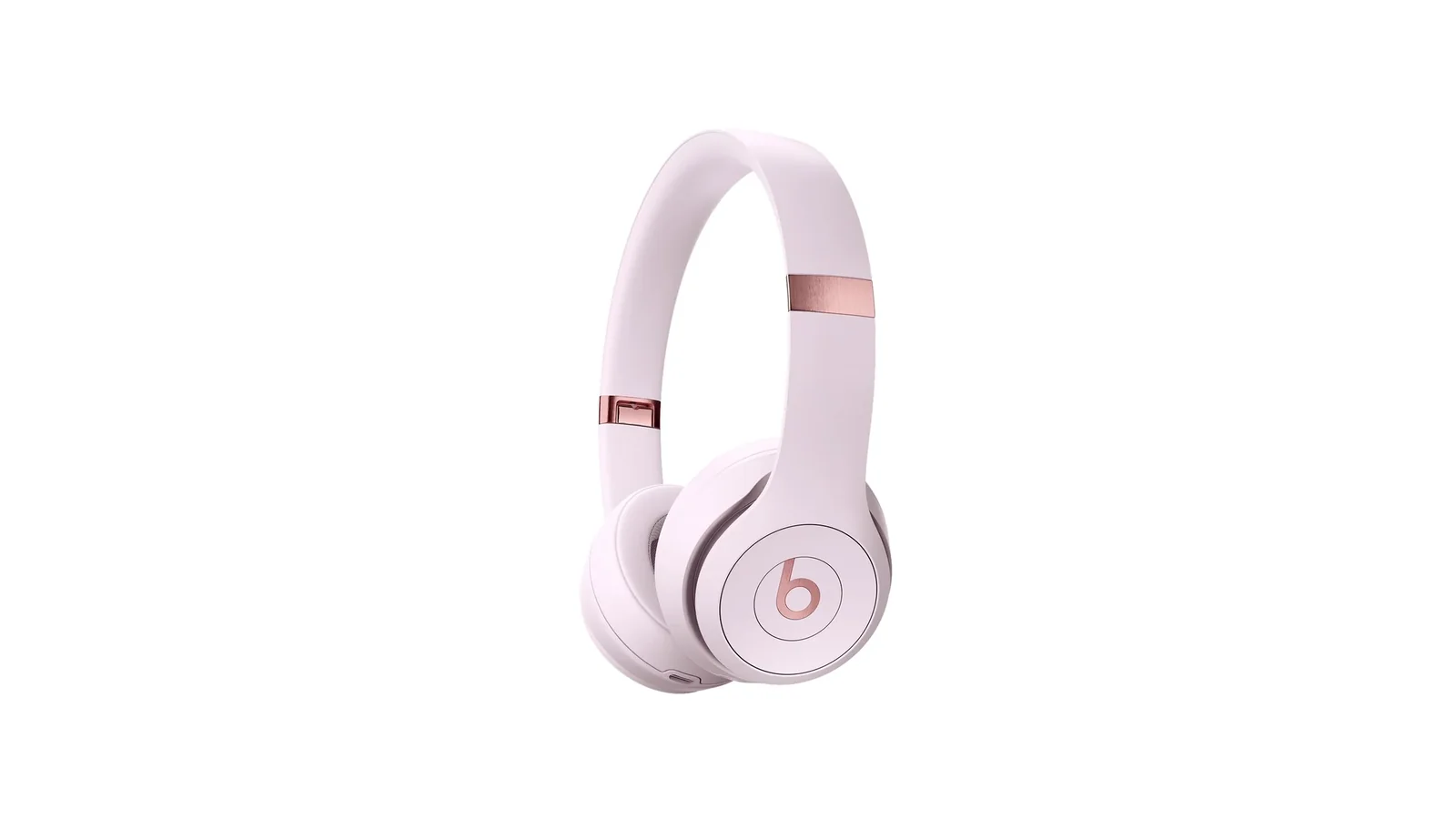
Beats Solo 4 Review: The First Solo That Stopped Apologizing
50-hour battery, USB-C lossless, Bluetooth 5.3, and still no ANC. I spent a month figuring out where the upgrades land.
The Nerd Apr 17 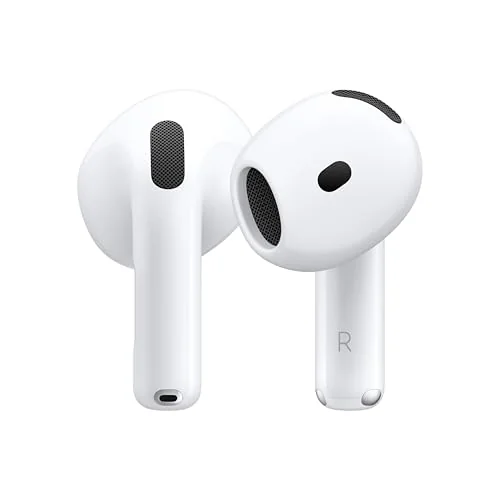
Apple AirPods 4 (ANC) Review: Noise Cancellation Without the Silicone Tips
Open-fit ANC that dropped subway noise 60% with no silicone seal. The H2 chip makes it work, but battery hits 5 hours max.
The Nerd Apr 15 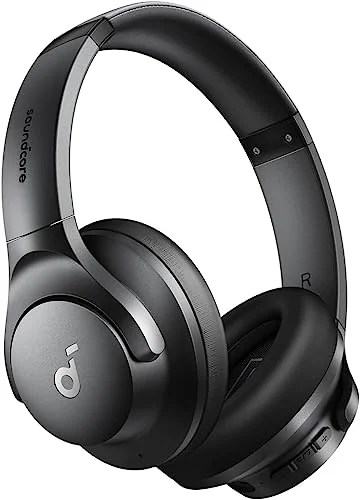
Soundcore Q20i Review: Budget ANC Headphones That Get the Physics Right
Hybrid mics, 40mm drivers, and a Soundcore app that earns its install. A month of commutes, flights, and gym sessions with the Q20i.
The Nerd Apr 15 
Logitech G305 vs G502 Hero: Wireless Freedom or Wired Precision
Two Logitech mice sharing the HERO sensor but almost nothing else—one's a 99g wireless featherweight, the other a 121g wired button fortress.
The Nerd Apr 18 
Amazon Fire TV Stick 4K Plus Review: Wi-Fi 6 and Cloud Gaming at $30
Wi-Fi 6 eliminated buffering during concurrent household load. AI search actually understood intent. Xbox cloud gaming sits at 85ms.
The Nerd Apr 17