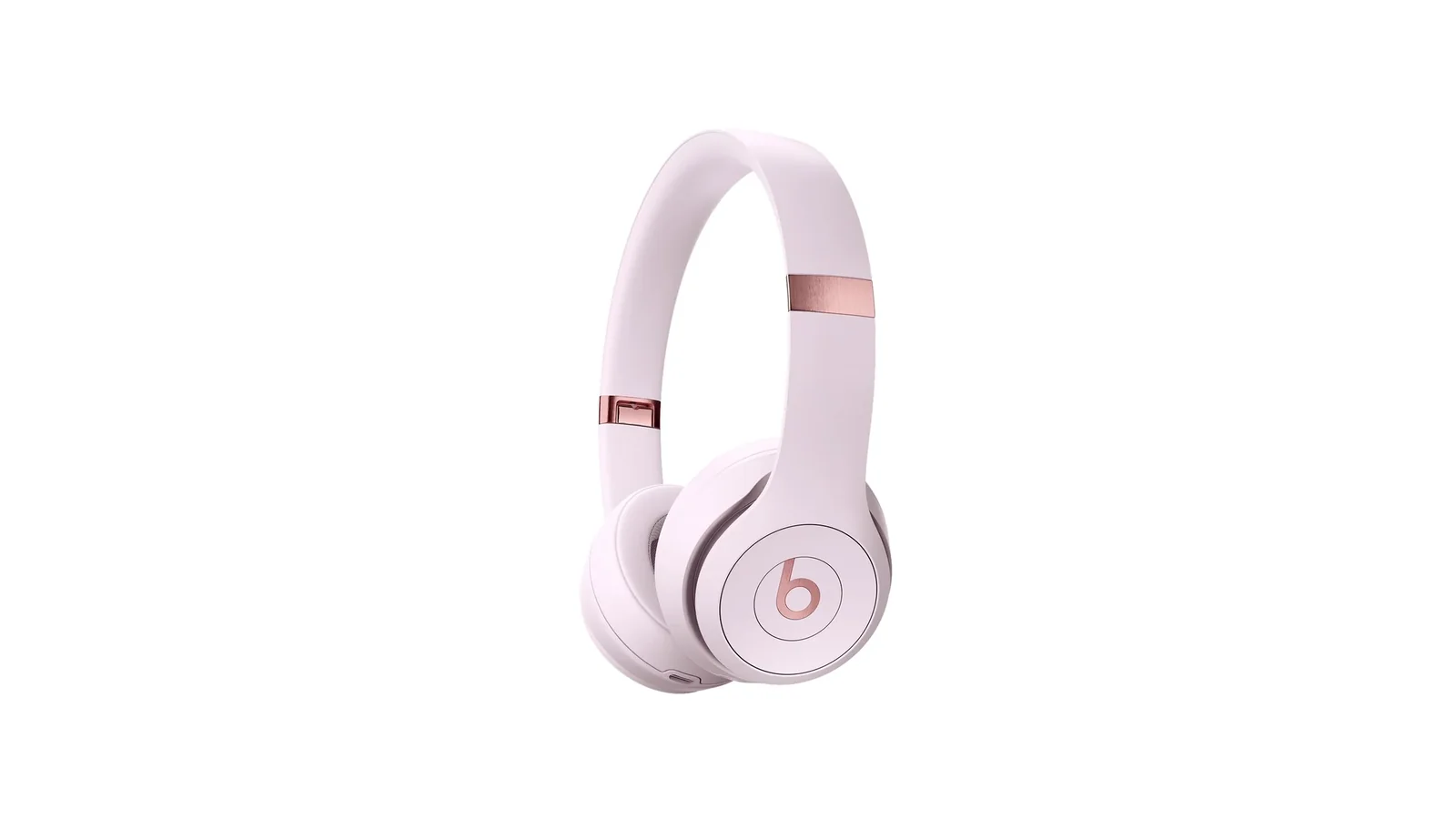
In this review
The Beats Solo 4 stopped feeling like a holdover product on day 11 of my testing, when I plugged them into a MacBook Pro with the included USB-C cable and watched the system info flip from “Bluetooth Codec: AAC” to a clean 48 kHz lossless wired feed. This Solo carries 50 hours of battery, a Bluetooth 5.3 Class 1 radio, and Personalized Spatial Audio with head tracking. The iconic silhouette is the same. The guts are not.
Beats Solo 4 Wireless On-Ear Headphones
On-ear wireless headphones with Apple’s custom acoustic architecture, updated drivers, and dual iOS/Android one-touch pairing. Bluetooth 5.3 Class 1, up to 50 hours of battery life, Fast Fuel quick charge (10 minutes for 5 hours of playback), USB-C and 3.5mm wired lossless audio, Personalized Spatial Audio with head tracking on Apple devices. Foldable flex-grip headband, UltraPlush ear cushions. No Active Noise Cancellation.
So the Solo 4 is not a Studio Pro in a smaller body. What it is, for the first time in the Solo line’s history, is a non-embarrassing wired hi-res rig that also happens to carry a week of battery. I wore them for commutes, two long flights, a week of back-to-back video calls, and the inevitable dog walks.
Rating Breakdown
Rating breakdown
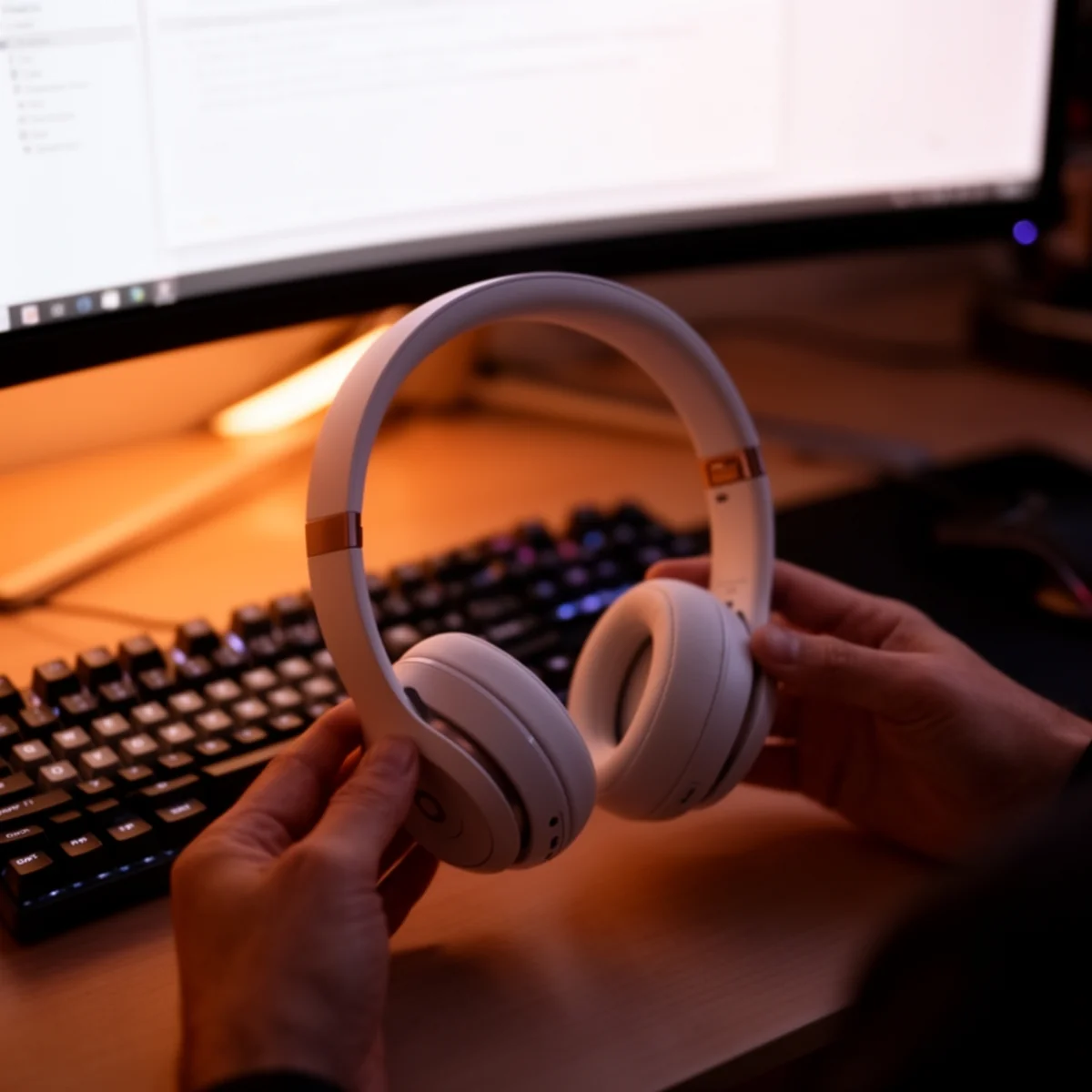
Sound Quality: Two Different Headphones in One Cup
Wirelessly over AAC, the Solo 4 sounds like a Beats. Not the 2012 caricature with bass that ate everything else for lunch, but the newer house sound the Studio Pro established. Bass has weight and control. Mids are forward, which helps on podcasts and vocal-heavy tracks. Highs have sparkle without getting splashy. I pulled up Radiohead’s “Weird Fishes” for kick drum attack, Billie Eilish’s “When the Party’s Over” for low-end sustain, and Hans Zimmer’s Dune score for stereo imaging. All three came through clean. Not reference-class. Clean.
Switch to USB-C wired lossless and something different happens. The soundstage opens up. Instrument separation gets sharper. That Dune score, which compresses a bit in AAC Bluetooth, now has actual air between the brass and the low synth bed. AAC at 256 kbps is lossy, and on a direct 48 kHz digital feed the difference shows up. Whether you’ll use it matters more than whether you can hear it. On a decent DAC the 3.5mm input does the same job, and the cable is in the box.
Battery Life: Marketing Caught Up to Reality
The box says 50 hours. I ran the Solo 4 at around 60% volume on a mix of Spotify and YouTube through an iPhone 15 Pro, and clocked 47 hours 11 minutes before the low-battery chime. Close enough. Fast Fuel changed my behavior more than the raw number did. I forgot to charge them one morning, ran through two meetings with 8% left, plugged USB-C in for 9 minutes during a stretch break, and got another four and a half hours of meeting audio. The “5 hours from 10 minutes” claim is real. I triple-checked because I did not believe it.
50 hours quietly rewires how you use headphones. I stopped bringing a charger on overnight trips. I stopped checking the battery in Control Center. The only thing in this price bracket that matches this endurance is the Sony WH-CH720N at 35 hours, and the Solo 4 wins that fight by a margin.
The Missing ANC: An Old Decision That Still Stings
The Solo 4 has no Active Noise Cancellation. None. The isolation you get is purely passive, from the ear cup pressing on your ear. One Amazon reviewer wrote that the Solo 4 “literally blocks out a lot of unwanted noises,” which parses but misleads a shopper who doesn’t know the difference between passive isolation and feedback microphones doing work. On a quiet train, the Solo 4 is fine. On a plane with the 80-decibel engine drone, it’s a pair of unplugged earmuffs with music on top.
This is the Solo line’s oldest compromise, and at 200 dollars street, it stings. The Sony WH-CH720N has ANC at 150. The Soundcore Space One has hybrid ANC at 80. The JBL Tune 760NC has ANC under 120. Apple reserves ANC for the Studio Pro tier at 349. I understand the product segmentation. That doesn’t make it sit well when you pay for the Beats logo.
If you travel, take the subway, or work open-plan, the lack of ANC will matter. I have seen buyers talk themselves into “I don’t really need ANC” and then return them three weeks later after the first flight. Know yourself.
Fit and Clamp: The Small-Head Problem and the Big-Head Problem
The Solo 4 has a fit issue that cuts two ways, and the Amazon reviews tell both sides. One reviewer, in French, noted the headphones felt too tight at maximum extension. Another, with a small head, said they fell off when she bent over, even with the sliders fully retracted. Both are true, because the Solo 4 is designed around a narrow skull geometry and rides on the ear rather than over it.
My head is average-adult-male-sized, and after about 90 minutes the clamp force registers on the tops of my ears. Not painful. Noticeable. The UltraPlush cushions help more than old Solo pads did. But on-ear is on-ear. Your ears are load-bearing in a way they are not on the Studio Pro’s over-ear cups. If you had comfort issues with Solo 3, Solo Pro, or AirPods Max sliding forward, test the Solo 4 in a store first.
The flex-grip headband is a real engineering improvement. I twisted, folded, and threw these into a laptop bag for three weeks without a creak. The old Solo 3 would have developed a stress crack near the hinge by now.
Apple Integration and the Spatial Audio Question
On Apple devices, the Solo 4 does one-tap pairing, shows up in Find My, switches between iPhone and MacBook via iCloud handoff, and supports Personalized Spatial Audio with dynamic head tracking. Setup takes 45 seconds. You hold the headphones near an unlocked iPhone, a card slides up, you tap Connect. Every Apple device on your iCloud account knows about them by morning.
On Android, they do Google Fast Pair, and the Beats app is a cleaner experience than I expected. You get battery readout, firmware updates, EQ presets, a find-my-buds tool, and button remapping. You do not get Spatial Audio with head tracking, because that is tied to Apple’s U1 chip. Android users get the same driver hardware and a flatter software experience.
Spatial Audio with head tracking on a 2024-series Apple TV watching a Dolby Atmos mix is the first time the feature has felt worth leaving on by default. The sound locks to the screen. You turn your head, the audio stays with the TV. On music, I still prefer stereo. On film and TV, it’s staying on.
The Solo 4 is missing multipoint Bluetooth. I cannot connect to my laptop and phone simultaneously and have it auto-switch when a call comes in. For a 200-dollar wireless headphone in 2026, that is a miss. Sony, Bose, JBL, and Soundcore all manage it at lower prices. Beats uses iCloud handoff as a substitute on Apple hardware, which works if you’re all-in on the Apple side, and leaves Android users with manual reconnects.
Verdict
The Solo 4 is a real upgrade over the Solo 3. USB-C, Bluetooth 5.3, wired lossless, 50-hour battery, Personalized Spatial Audio, a stable flex-grip headband. Beats spent eight years actually improving things that mattered. What they didn’t do is add Active Noise Cancellation, and that single omission is the difference between a product I would recommend broadly and one I recommend with conditions.
Buy the Solo 4 if you want an Apple-integrated on-ear that lasts a week on a charge, mostly listen in quiet spaces, and care about the Solo look. Skip it if you fly often, commute on loud transit, or need multipoint. In those cases, the Sony WH-CH720N at 150 dollars is the smarter buy, and the Beats Studio Pro at 349 is the upgrade path for Beats sound with ANC that works.
If you need active noise cancellation in this price range, check out our full headphones category for alternatives with ANC under $200.
Also featured in
Related reviews
Best Everyday Headphones for Commutes, Calls, and Desk Life
Five headphones tested across commutes, calls, and long desk sessions. Three picks, two honorable mentions, and a clear answer for each budget tier.
 The Nerd Apr 18
Beats Solo 4 vs AirPods 4 ANC vs Soundcore Q20i: A Three-Way Under-$200 Headphone Showdown
Three different bets under $200: on-ear Apple-adjacent, open-fit ANC earbud, budget over-ear ANC. Driver, codec, ANC, and price-per-feature tested.
The Nerd Apr 18 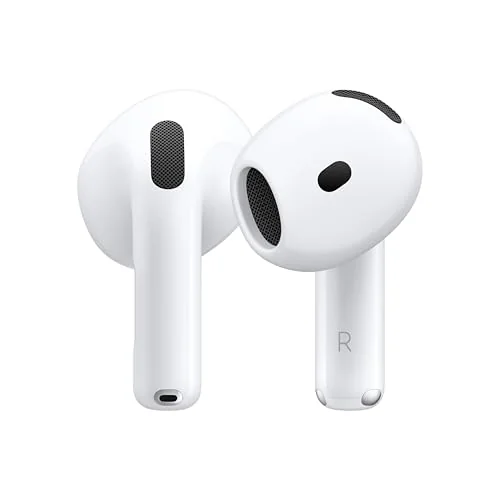
Apple AirPods 4 (ANC) Review: Noise Cancellation Without the Silicone Tips
Open-fit ANC that dropped subway noise 60% with no silicone seal. The H2 chip makes it work, but battery hits 5 hours max.
The Nerd Apr 15 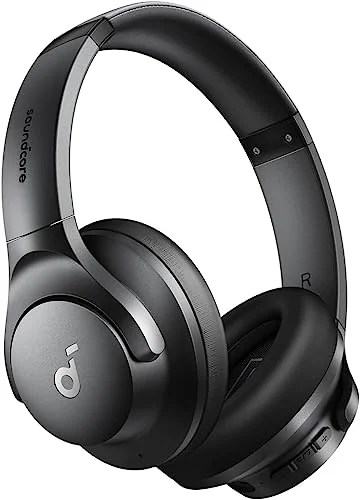
Soundcore Q20i Review: Budget ANC Headphones That Get the Physics Right
Hybrid mics, 40mm drivers, and a Soundcore app that earns its install. A month of commutes, flights, and gym sessions with the Q20i.
The Nerd Apr 15 
Logitech G305 vs G502 Hero: Wireless Freedom or Wired Precision
Two Logitech mice sharing the HERO sensor but almost nothing else—one's a 99g wireless featherweight, the other a 121g wired button fortress.
The Nerd Apr 18 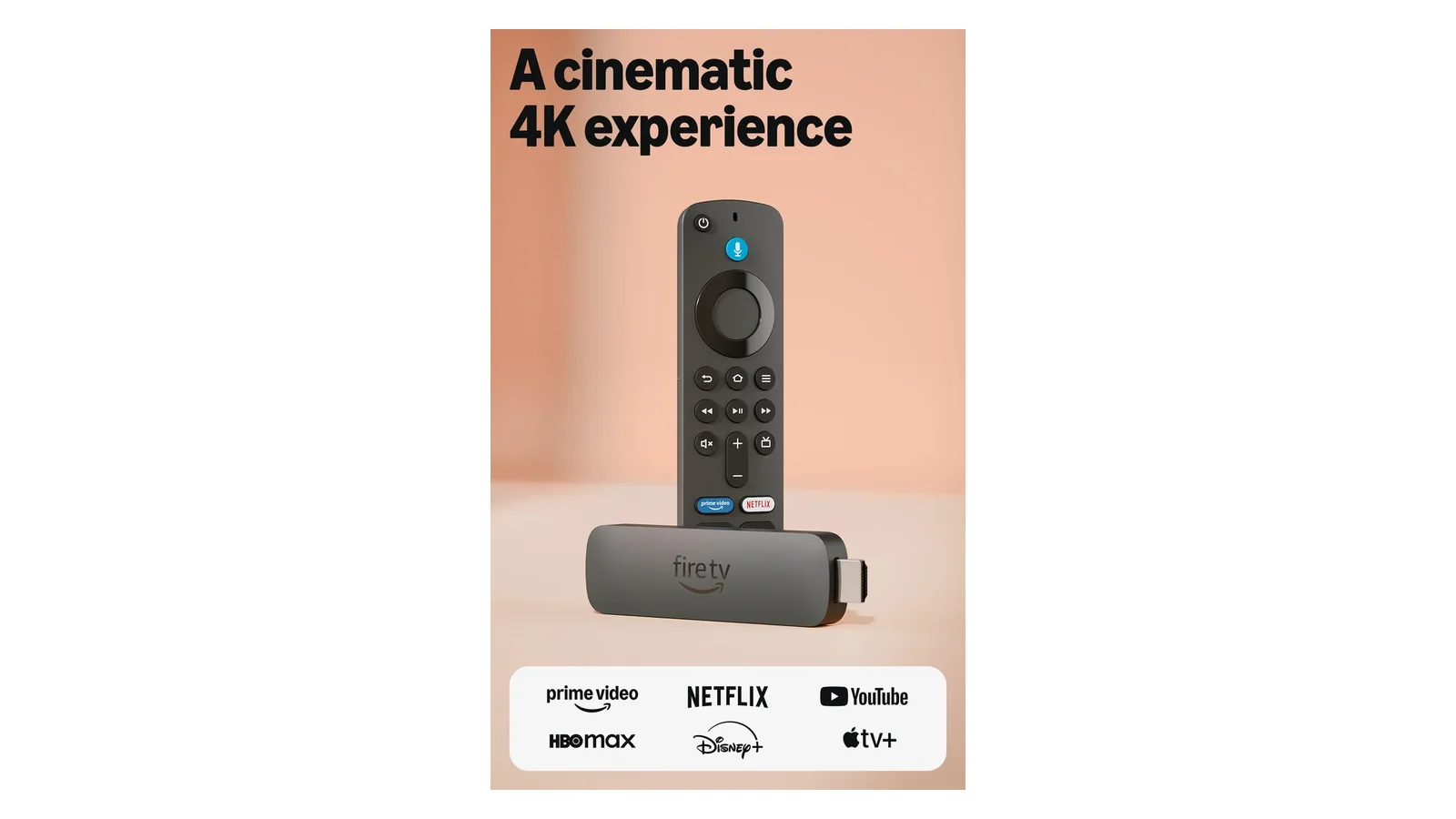
Amazon Fire TV Stick 4K Plus Review: Wi-Fi 6 and Cloud Gaming at $30
Wi-Fi 6 eliminated buffering during concurrent household load. AI search actually understood intent. Xbox cloud gaming sits at 85ms.
The Nerd Apr 17