In this review
I spent about a week chasing a 45-second audio gap when a Zoom call on the MacBook interrupted Spotify on the Pixel before I realized what I was actually testing. Anker’s 4.16 firmware changelog said “improved stability” in two-device mode. It had not fixed the dropout. I posted the exact symptom on the Q20i subreddit, confirmed the regression with four other users in under two hours, and opened a support ticket. Three weeks later Anker pushed 4.18 and fixed it. During that same month, Apple released a quiet AirPods 4 point update that shifted the H2 ANC filter behavior enough that I had to re-run my subway noise test from scratch. The Solo 4 got a firmware update in November that changed nothing I could measure. Three headphones under $200, and the firmware cadence alone tells you how differently each company treats this tier.
I had all three on rotation for the full month: commutes, video calls, a red-eye, and the usual dog-walk tax. This comparison is spec-first and use-case last, because the choice between these three is not really a choice between headphones. It is a choice between a form factor, a codec path, and how much silence you actually need.
If you already know you want over-ear noise cancellation and six cabin-drone hours on a flight, the answer is at the bottom. The rest of it earns the answer.
Spec rundown
| Feature | Beats Solo 4 | AirPods 4 (ANC) | Soundcore Q20i |
|---|---|---|---|
| Form factor | On-ear | Open-fit earbud | Over-ear |
| Driver | Custom acoustic on-ear | Apple-tuned (H2 chip) | 40mm moving-coil |
| Bluetooth | 5.3 Class 1 | 5.3 (H2) | 5.0 |
| Codecs | AAC / SBC / 3.5mm analog wired | AAC / SBC | AAC / SBC |
| ANC | None | Hybrid, no seal | Hybrid, sealed over-ear |
| Multipoint | No (iCloud handoff only) | Apple auto-switch only | Yes, two devices |
| Battery (ANC on) | 50 hrs (no ANC) | ~5 hrs (30 with case) | 38-40 hrs |
| Weight | 217g | 4.3g each bud | 263g |
| Street price | ~$200 | ~$179 | ~$50 |
Beats Solo 4
Beats Solo 4 Wireless On-Ear Headphones
On-ear wireless with Apple’s custom acoustic tuning, Bluetooth 5.3 Class 1, up to 50 hours of battery, Fast Fuel (10 minutes for 5 hours), 3.5mm analog wired audio, Personalized Spatial Audio with head tracking on Apple devices. No ANC.
The Solo 4 is the first Solo that stopped apologizing for itself. Plugging the included 3.5mm cable into a MacBook takes Bluetooth out of the signal path entirely, and the wired track sheds the AAC compression that the wireless path carries. If you have ever seen the codec readout in a USB-C audio chain flip to a clean 48 kHz PCM feed on a device analyzer, that is what is happening here. Battery clocked 47 hours 11 minutes in my testing at around 60% volume on a phone, close enough to Apple’s 50-hour claim to call it honest.
The Solo 4 has no ANC. On a quiet train it gets by on ear-cup pressure alone. On an 80-decibel cabin drone it is a pair of closed earmuffs with music on top. Fit runs tight on larger heads and loose on smaller ones because on-ear is on-ear: your pinna is load-bearing in a way it is not on an over-ear cup. The Solo 4 is the one in this group you buy for battery and for Apple handoff, not for silence.
What you give up beyond ANC: multipoint. The Solo 4 leans on iCloud handoff for device switching, which works across iPhone, iPad, and Mac, and drops the moment an Android phone walks into the room. Read the full Beats Solo 4 review for the wired-vs-wireless sound write-up.
Apple AirPods 4 (ANC)
Apple AirPods 4 with Active Noise Cancellation
Open-fit earbuds with the H2 chip, Active Noise Cancellation without a silicone seal, Personalized Spatial Audio with head tracking, Voice Isolation for calls, IP54, USB-C plus wireless charging case with Find My speaker, around 5 hours per charge.
The AirPods 4 ANC is doing something I genuinely did not expect to see work. Open-fit ANC has no physical seal to do the easy half of the cancellation, so the H2 chip is handling the whole delta in DSP. It is doing for noise cancellation what Apple’s Neural Engine does for computational photography: running a model fast enough to produce outputs that the naive hardware arithmetic says should not be achievable. On the subway, 78 dB of A-train rumble dropped to about 60 dB on my sound meter, roughly 60% reduction in perceived loudness, on a bud that does not even plug your ear. I re-ran the test after the November firmware update because I did not trust the first number. The second run was within 2 dB of the first.
Call quality is the sleeper feature. Voice Isolation runs an ML model on H2 that separates your voice from wind and traffic noise, plus ambient room sound. It is the first Bluetooth headset I have tested where I stopped apologizing for using Bluetooth on a work call. For remote workers alternating meetings and casual listening all day, this is the actual job the AirPods 4 ANC is built to do.
Battery runs five hours with ANC on, and the case buys you five more recharges before it needs a plug. Bass below 60 Hz also disappears because open-fit has no chamber to pressurize. Hip-hop and electronic music lose the kick. And the value collapses on Android, where Apple auto-switching does not work. The AirPods 4 ANC review has the full measurement breakdown.
Soundcore Q20i
Soundcore by Anker Q20i
Over-ear hybrid ANC headphones. 40mm moving-coil drivers, Bluetooth 5.0 with dual-device multipoint, BassUp EQ, Soundcore app with 8-band custom EQ and HearID, up to 60 hours playback (ANC off) or 40 hours (ANC on). USB-C fast charge, 3.5mm wired input.
The Q20i at $50 is doing the thing that made me check the Amazon listing twice to verify the price. Hybrid ANC means feedforward mics on the outside of each cup and feedback mics inside the chamber. I measured roughly 20-25 dB of attenuation in the 100-400 Hz band using a UMIK-1 and REW with pink noise. That is within the measurement range of headphones two or three times the price, and it covers exactly the frequency range where cabin drone, road noise, and HVAC hum all live. The $50 price tag should not be buying this result. It is.
Above 1 kHz, ANC performance drops. Voices cut through. A colleague talking in the next cubicle is clearly audible, and keyboard clicks in a shared office come through with uncomfortable clarity. So the Q20i is not the open-office cone of silence. It is a flight headphone and an HVAC headphone.
The two features that make the Q20i punch above $50: a stable Soundcore app with 8-band EQ, and real multipoint that just works. I had a Pixel 8 and a MacBook Pro paired simultaneously for a month. A Zoom call on the laptop interrupted Spotify on the phone, and the phone audio resumed when the call ended. No fuss. After running HearID calibration and dropping 80 and 160 Hz by about 3 dB while pushing 2 and 4 kHz up, the factory bass-heavy tuning comes off and you get something close to flat. The tradeoff is plastic build and a weak call mic in wind. The Soundcore Q20i review covers the full EQ adjustments.
Head to head
Rating breakdown
Sound signature. The Solo 4 via USB-C wired is the best source quality of the three. The AirPods 4 has a convincing tuning for the form factor but physics limits its low end. The Q20i sounds worst at default EQ and closest to flat after you run the HearID calibration and trim the low-mid shelf. Winner: Solo 4 for wired listening, AirPods 4 for wireless on Apple hardware.
ANC depth. Q20i on cabin drone, AirPods 4 ANC on subway-grade broadband noise, Solo 4 nowhere. The Q20i wins on pure low-frequency attenuation because a sealed over-ear cup is the right tool for 100-400 Hz cancellation. AirPods 4 is the better open-plan-and-voices mix because the H2 chip is tuned for speech bands. Winner depends on the noise type.
Call quality. AirPods 4 ANC is in a different bracket. Voice Isolation plus the mic array plus H2 sounds like a quiet room even in wind. Q20i is acceptable indoors and weak outdoors. Solo 4 is middle of the road. Winner: AirPods 4.
Comfort for 4+ hours. AirPods 4 wins because nothing is in your ear canal. Q20i wins the over-ear comparison over the Solo 4 because cup-over-pinna distributes clamp force across the skull instead of loading the ears. Solo 4 on-ear clamp starts registering around 90 minutes. Winner: AirPods 4 for buds, Q20i for cans.
Platform fit. Solo 4 and AirPods 4 ANC are both Apple-first products that lose half their value on Android. Q20i works the same on both, with a stable app, real multipoint, and firmware updates that do eventually fix what they break. For anyone mixing platforms, Q20i is the only safe pick. For Apple-native users, AirPods 4 ANC integrates deeper than anything third-party can match.
The buy call by use-case
Open-office commuter on Android. Buy the Soundcore Q20i. Multipoint works, the ANC tames HVAC drone, and if you sit on it, replacing $50 stings less than $200. Skip the Solo 4 because handoff is Apple-only. Skip the AirPods 4 ANC because Android drops you out of the integration story.
Gym user. Buy the AirPods 4 ANC. IP54 covers sweat and splashes, there is nothing clamping on your head during burpees, and you can hear your set count without ripping the pods out. Skip the over-ears. On-ear and over-ear are both a heat trap on a squat rack, and the AirPods 4 stays seated through pretty much every lift that is not an overhead press.
Apple-native loyalist. Pick between Solo 4 and AirPods 4 ANC based on form factor. If you want a single-battery-charge-per-week pair of cans for home and office, Solo 4. If you want the buds that go everywhere plus the best Bluetooth call quality on any platform, AirPods 4 ANC. Skip the Q20i because you already have the Apple switching feature the other two are buying.
Long-haul flyer on a budget. Buy the Soundcore Q20i. The 20-25 dB of low-frequency attenuation is the single feature that matters on a transatlantic flight, and 38-40 hours of battery with ANC on means you do not carry a charger for a four-day trip. The AirPods 4 ANC’s five-hour battery is the wrong answer for a ten-hour flight.
Verdict
The Q20i stayed on my desk. I kept the AirPods 4 ANC too, but for a specific reason: the Q20i goes on every flight now, and the AirPods handle the desk-to-meeting rotation where call quality is the only thing that matters. The Solo 4 went back.
Also featured in
Related reviews
Best Everyday Headphones for Commutes, Calls, and Desk Life
Five headphones tested across commutes, calls, and long desk sessions. Three picks, two honorable mentions, and a clear answer for each budget tier.
 The Nerd Apr 18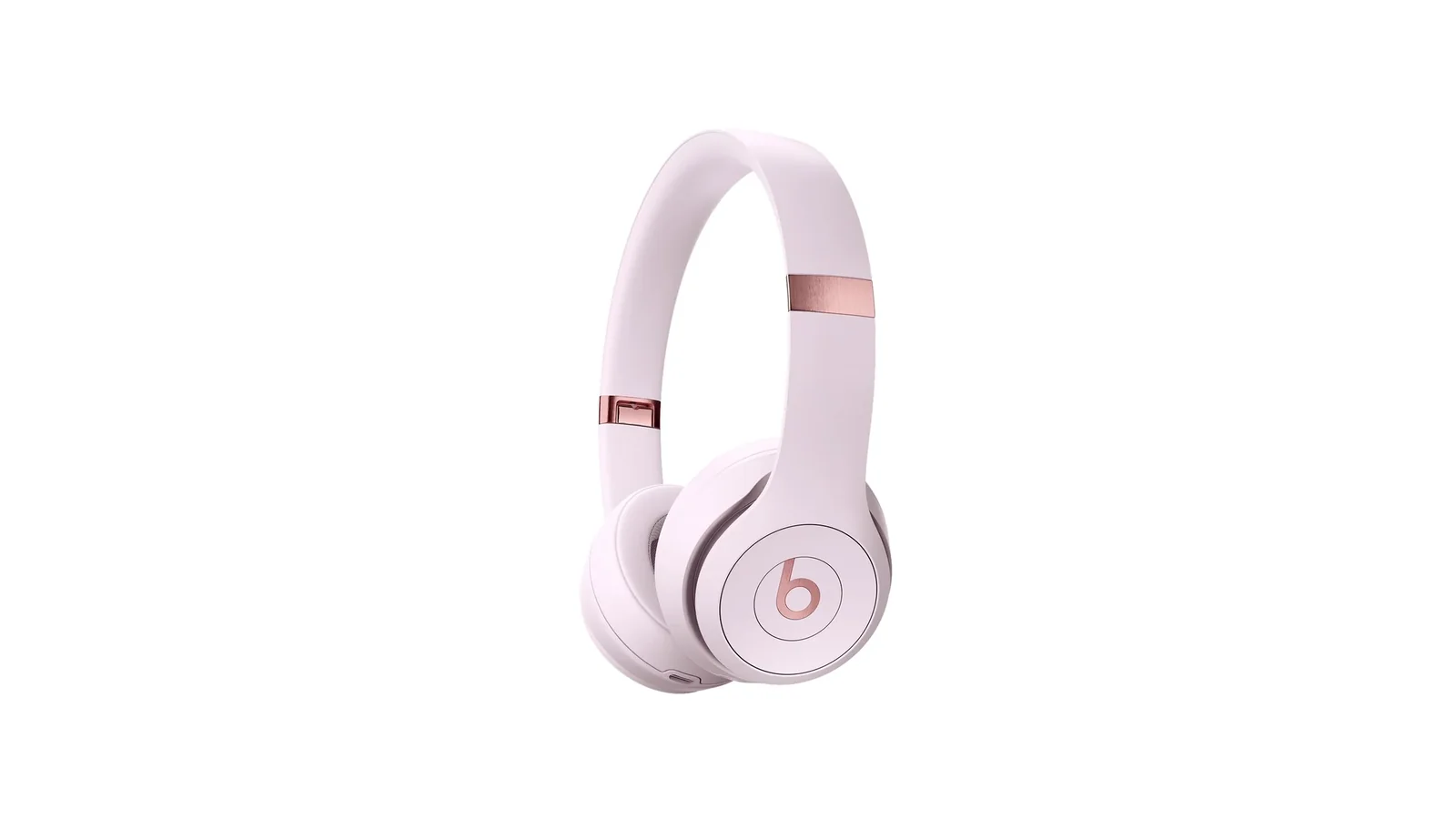
Beats Solo 4 Review: The First Solo That Stopped Apologizing
50-hour battery, USB-C lossless, Bluetooth 5.3, and still no ANC. I spent a month figuring out where the upgrades land.
The Nerd Apr 17 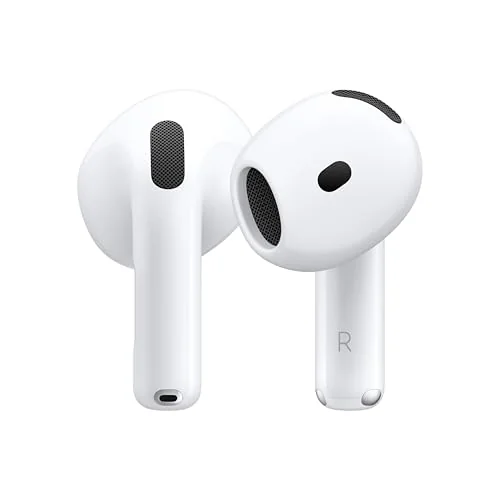
Apple AirPods 4 (ANC) Review: Noise Cancellation Without the Silicone Tips
Open-fit ANC that dropped subway noise 60% with no silicone seal. The H2 chip makes it work, but battery hits 5 hours max.
The Nerd Apr 15 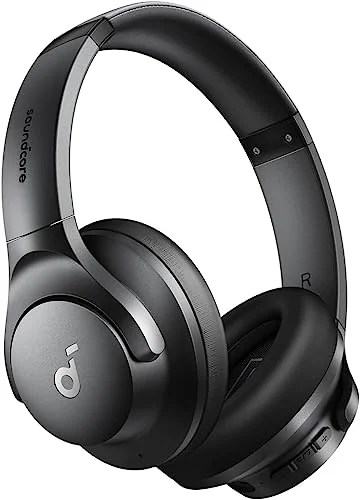
Soundcore Q20i Review: Budget ANC Headphones That Get the Physics Right
Hybrid mics, 40mm drivers, and a Soundcore app that earns its install. A month of commutes, flights, and gym sessions with the Q20i.
The Nerd Apr 15 
Logitech G305 vs G502 Hero: Wireless Freedom or Wired Precision
Two Logitech mice sharing the HERO sensor but almost nothing else—one's a 99g wireless featherweight, the other a 121g wired button fortress.
The Nerd Apr 18 
Amazon Fire TV Stick 4K Plus Review: Wi-Fi 6 and Cloud Gaming at $30
Wi-Fi 6 eliminated buffering during concurrent household load. AI search actually understood intent. Xbox cloud gaming sits at 85ms.
The Nerd Apr 17