In this review
The first time I pulled the ZELUS weighted vest out of the box, my training partner walked into the garage, took one breath, and asked if I’d spilled something. I hadn’t. That’s just what a sealed bag of iron-sand-filled neoprene smells like on day one. I hung the thing on the fence for 48 hours in direct sun before I wore it anywhere.
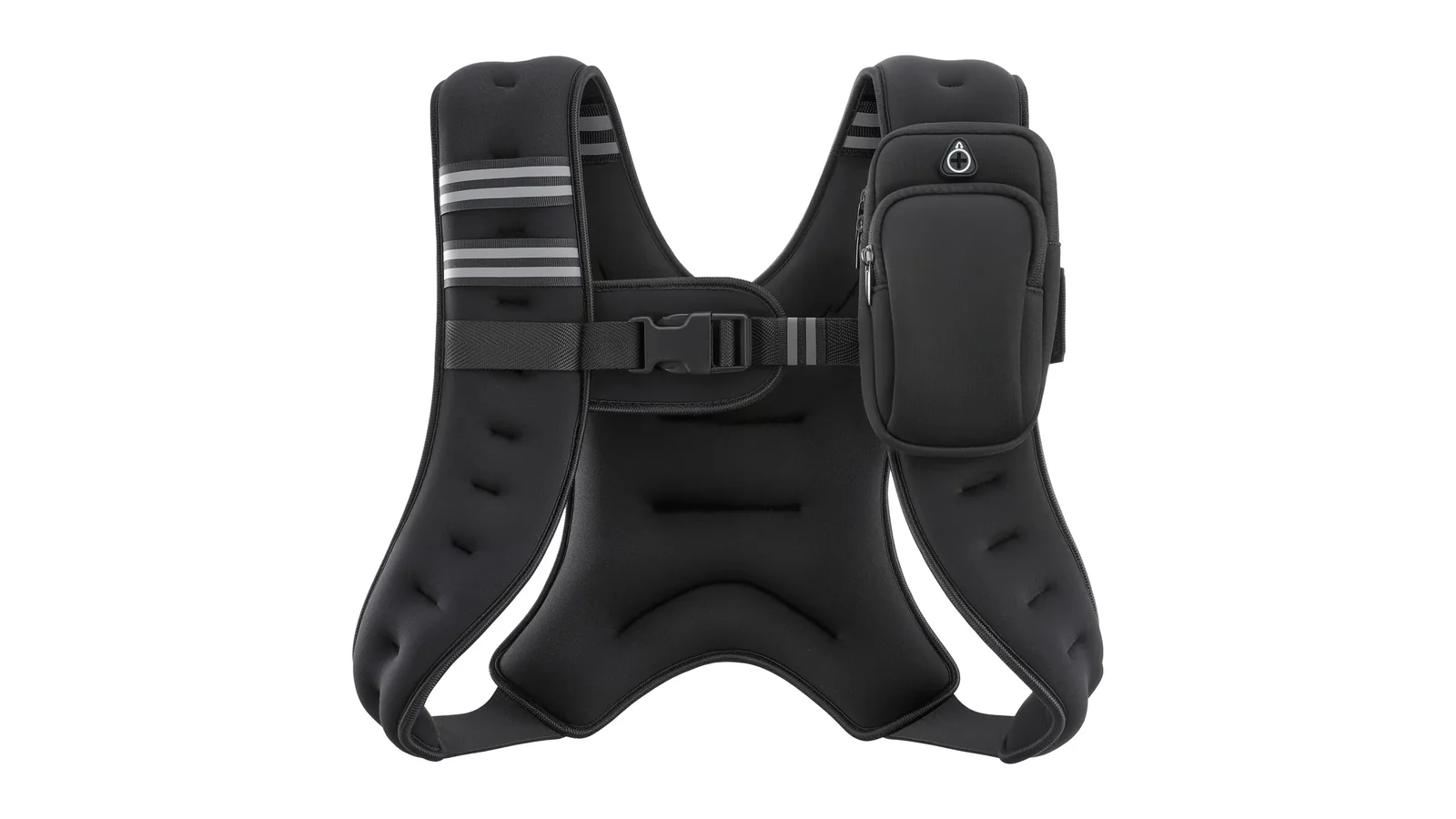
That’s the opening caveat for the ZELUS Weighted Vest. The smell is real. Once you push past it, you get a 12-pound fixed-load vest for about thirty bucks that held up to three weeks of my training without anything ripping, shifting, or giving up.
ZELUS Weighted Vest
A pullover-style neoprene weighted vest with iron-sand fill, cushioned shoulder straps, reflective stripe, and a detachable front pocket. Available in 6, 8, 12, 16, 20, 25, and 30 lb versions.
Rating Breakdown
Rating breakdown
Testing Setup
I tested the 12 lb version for three weeks. That covered four zone-2 runs (three to five miles each), six weighted hill walks, and eight circuit sessions where the vest came on and off between sets of pushups, lunges, and step-ups. I weigh about 175 pounds, so 12 lb sits right around 7 percent of body weight. That’s the zone most research points to for walking load before joint stress starts outweighing the benefit.
I also washed it twice. Hand wash, cold water, hung to dry. Both times I let it finish drying outside because of the smell issue. More on that.
Fit and On-Body Feel
ZELUS calls this one-size-fits-most, and on me it sits the way you’d want. The elastic side straps pull the front and back panels snug against my ribs so the mass moves with me instead of flopping on each footstrike. I can sprint a hundred meters without the vest bouncing off my chest. That alone puts it ahead of the cheaper sandbag-style vests I’ve tried.
Your shoulders will tell you whether a vest works. The ZELUS straps are cushioned enough that I never ended a session thinking about them. No pinching, no hot spots, no need to readjust mid-walk. If you run lean through the torso (I know a training partner who’s six-foot-two and about 155), the panels can shift a little on a longer effort. Not enough to be dangerous, but enough to notice. Broader chests reported the opposite: snug but never restrictive.
One real note on the pullover design. You duck your head through a fixed opening to put it on. Fine at 12 lb. I borrowed a friend’s 25 lb version for a session and the on/off process was awkward in a way a front-zip vest just isn’t. If you’re buying heavy, think about whether you want to wrestle that over your head three times a week.
The Smell (Because You’re Going to Ask)
Neoprene filled with iron sand off-gasses. Out of the bag, the ZELUS smells like a new pool toy crossed with a tire shop. Leaving it outside for two days in the sun cut most of it. After three weeks of sweat and two washes, the smell is 90 percent gone. Not gone gone, but gone enough that I don’t notice when I’m wearing it.
If you live in an apartment without outdoor space, this matters. Plan to hang it in a bathroom or garage for a week before use. I’m not exaggerating about this part. Every long-term review mentions it, and every one is right.
Performance in Training
Fixed-load vests aren’t supposed to be exciting. You put them on, you go do your thing, they make everything harder in the right way. The ZELUS does that. On hill walks, my heart rate sat about 15 beats higher at the same pace compared to unweighted. On circuit work, pushups and step-ups become honest again once you’ve been doing them bodyweight for a while.
The reflective stripe isn’t a gimmick. I do a lot of pre-dawn walks, and the stripe catches car headlights from a reasonable distance. Not a substitute for a proper safety light, but a meaningful upgrade over a plain black top.
Where the vest falls short is breathability. Neoprene does not breathe. At all. On a 55-degree morning I sweated through my shirt in about twenty minutes. In summer, I can’t see wearing this past 75 degrees without feeling cooked. If you train year-round outdoors and you live somewhere hot, that’s a real limit.
The front zipper pocket held my phone through every session. No bounce, no creep. The rear mesh pocket is more of a stash spot than a real pocket, but it’s fine for a gel or a key.
Durability After Three Weeks
The double stitching is legitimate. I checked the seams after each wash and nothing is fraying, pulling, or showing iron sand through the neoprene. The zipper still glides clean. The elastic side straps have not loosened. For thirty dollars, I expected something to show wear by now. Nothing has.
Reviewers who’ve owned the vest for a year or more say the neoprene can start to crack in the folded areas after heavy daily use, especially if you store it crumpled. Hang it flat when you’re done. Simple fix.
What It Isn’t
This is a fixed-load vest. The weight is sewn in. You cannot add plates, subtract plates, or progress the load over time without buying a new vest. If you’re the kind of lifter who thinks in months and wants a training tool you’ll still use at a different weight next year, buy a plate carrier. Something like a 5.11 TacTec runs three to four times the price but lets you scale from 10 to 40+ pounds.
The ZELUS is an entry point. It makes sense if you’re new to loaded walking or rucking, you want to try it before committing to a plate system, or you just want a walking vest that costs less than a pair of running socks.
Verdict
If you’re walking, easy running, or doing circuits and you want weight on your torso without spending a hundred bucks, this is the one I’d point you to. Just air it out before you wear it, pick a weight between 5 and 10 percent of your body weight to start, and hang it flat when you’re done with it. Do those three things and the ZELUS will outlast a lot of gear that costs more.
If you’re starting bodyweight work before adding load, check out our Amazon Basics Neoprene Dumbbells review for a complementary tool in the same price range.
Also featured in
Related reviews
Owala FreeSip 24oz vs Sway 40oz: Which Capacity Actually Fits Your Session
Two Owala bottles, one lid family, very different carry. I mapped capacity to session length across lifts, rides, and hikes so you only buy the one you need.
 The Fitness Guru Apr 18
Best At-Home Fitness Gear for Small Apartments
What actually earns its two feet of storage when the whole gym has to fit under a couch. Six tested picks for the studio lifter.
The Fitness Guru Apr 18 
Amazon Basics Neoprene Dumbbells Review: Honest Home-Gym Staple
Fixed-weight neoprene dumbbells that stayed grippy through five weeks of sweaty tempo work, accessory lifts, and HIIT finishers.
The Fitness Guru Apr 15 
Brooks Ghost 17 Review: The Neutral Daily Trainer That Actually Got Better
The Ghost 17 added 3mm of DNA LOFT v3 in the forefoot and made the fit snugger. After 120 miles and one half marathon, here's what changed.
The Fitness Guru Apr 15 
Fit Simplify Resistance Bands Under $10: The Cheapest Way to Start Strength Training
Ten bucks for five resistance bands. I ran the cost-per-use math against $35 fabric sets and a $50 monthly gym. The numbers are not close.
 The Budget Hunter Apr 15
Fit Simplify Resistance Bands Review: A $13 Starter Kit That Punches Up
Five latex loop bands under $15. I trained with them for a month, including glute work, warmups, and a hotel-room lift day.
The Fitness Guru Apr 15