In this review
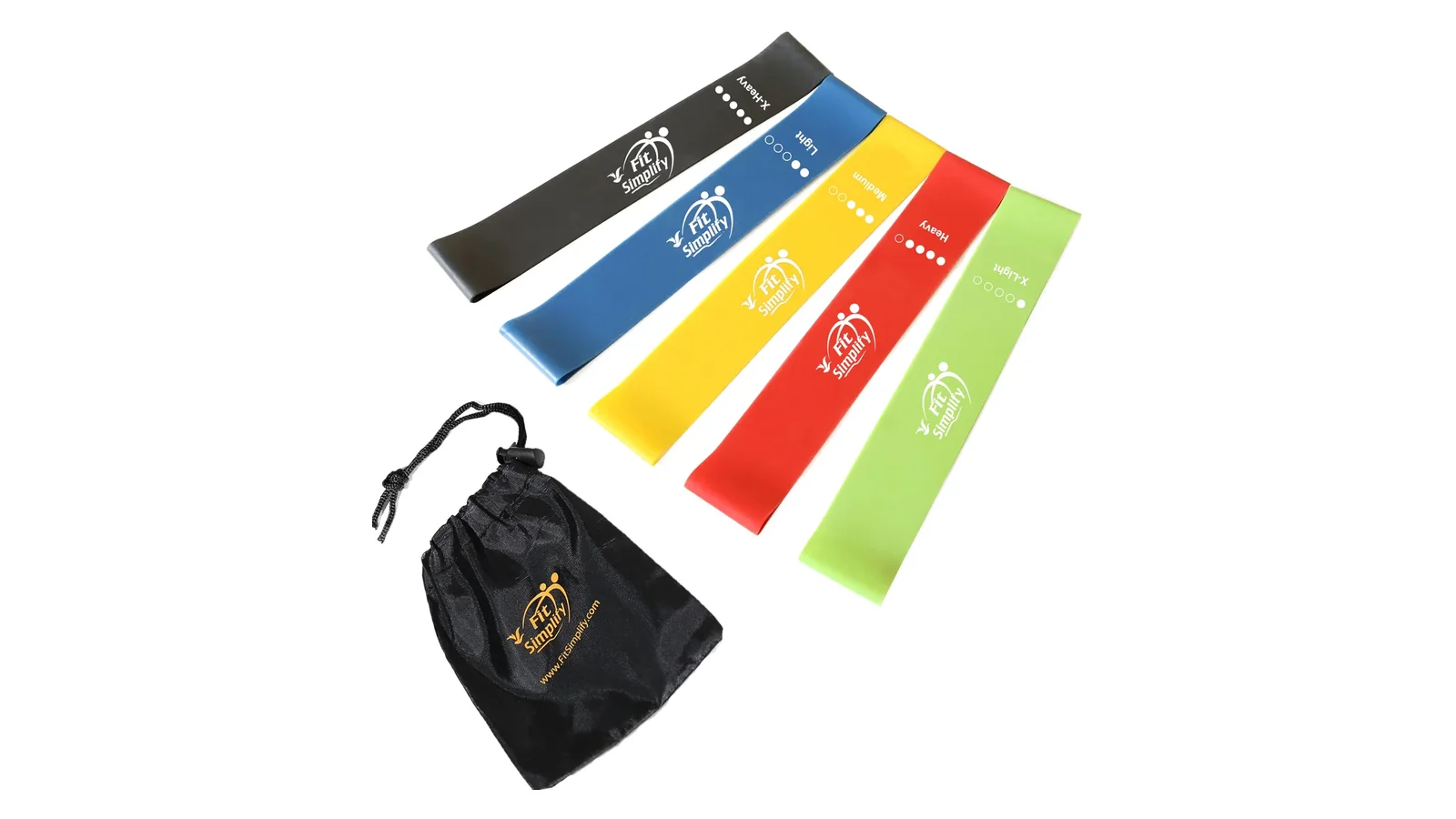
The second set of banded lateral walks, the green band slid up my thigh, rolled into a tight cord, and pinched. I unrolled it. Three reps later it happened again. That small annoyance is the honest opening to any review of the Fit Simplify Resistance Loop Exercise Bands, because it tells you what you’re buying for under $15 and what you’re giving up versus a $35 fabric hip band. I trained with this set for four weeks. I still use them. I also still have to stop and reset the band on glute days.
Fit Simplify Resistance Loop Exercise Bands 5-Pack
Five 12” x 2” flat latex loop bands in graduated tensions from Extra Light through Extra Heavy, a drawstring carry bag, and a small printed exercise booklet. Sits around $13 on Amazon and has held a 4.5-star average across roughly 135,000 ratings.
Rating Breakdown
Rating breakdown
How I Tested Them
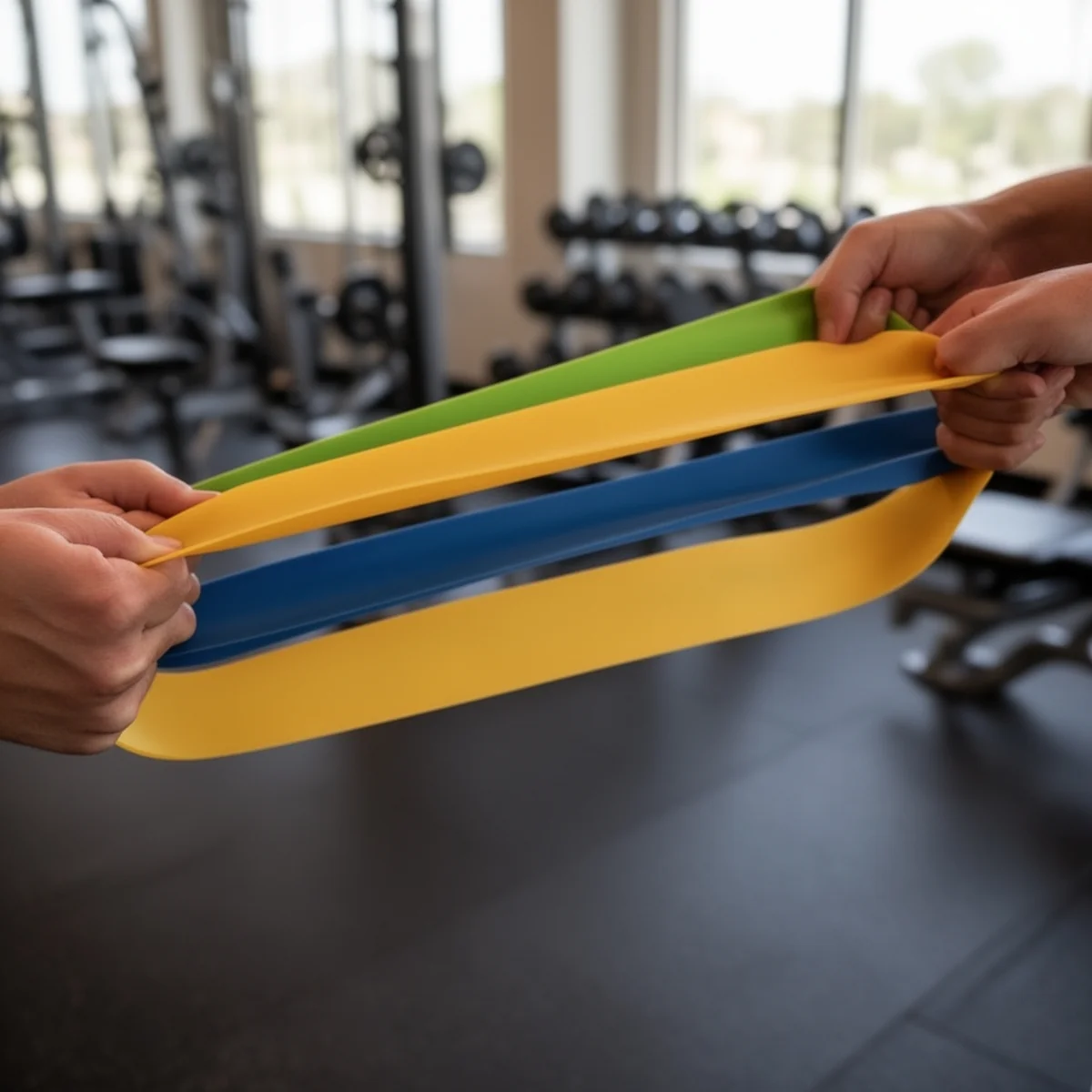
Four weeks, roughly 18 sessions. I used the bands as warmup activation before every lower-body lift, three times a week, and built a full band-only circuit for a Tuesday travel day where the hotel gym was closed. I ran them through a sweaty HIIT class on a Saturday morning so they sat in a wet bag for nine hours before I rinsed them. I pulled the Heavy and Extra Heavy into my pressing warmups for banded pull-aparts and face pulls.
Total cost of entry: $13.71 the day I bought them. That matters for the verdict.
Resistance Range: Actually Useful Progression
Five tensions is one more than most cheap packs bother with, and the gap between them lands better than I expected. Extra Light is a real warmup band, not a marketing band. I used it for hip CARs, banded pull-aparts, and glute activation before squats, and it loaded the muscle without stealing warmup energy. Extra Heavy, on the other end, is genuinely hard. Banded squats with it stapled my hips down in the bottom position in a way I’d normally need a mini-band monster for.
The Light and Medium are where most home lifters will live, and they track well with what a physical therapist would hand you. Clamshell work fits the Light. Glute bridges and lateral walks sit comfortably on the Medium. The Heavy is where I noticed real tension stacking on a banded deadlift setup.
The honest catch: these are identical-length loops, not mini-bands. At 12 inches, they’re long enough for around-the-knees work but short for any above-the-head stretching. If you want pull-up assistance or bigger overhead range-of-motion work, you need longer tube bands, not these.
Durability: Latex Beats The TPE Stuff
Four weeks in, the bands show no surface cracks and no chalky residue. I’ve burned through TPE bands in a month before, and the Fit Simplify set is noticeably better material. Natural latex stretches further without that “about to snap” feel, and the finish is matte and grippy rather than the slick feel you get on cheaper imports. I’d expect a year of regular home use if you don’t store them in direct sun.
A few reviewers who use them daily for rehab work reported no failures at the six-month mark. That lines up with what I felt after a month. If you have a latex allergy, skip this and go fabric.
Where They Slip: Glute Days
The one flaw worth knowing before you buy. On skin, the bands roll. On leggings or shorts, they roll less but still migrate up. Every lateral walk, every banded glute bridge, every fire hydrant, I reset the band once or twice a set. It’s not a dealbreaker if you know going in. It is a dealbreaker if you were expecting fabric-band stability.
Fabric hip bands solve this completely and cost $25 to $35 for a pack of three. If glute work is 80% of why you want resistance bands, buy a fabric set. If you want a do-everything kit that covers activation plus warmups plus upper-body pull-aparts plus travel workouts plus physical therapy, the latex loops do more jobs for less money.
Travel and Storage: The Real Win
The drawstring bag is the quiet feature no one mentions until they need it. The whole kit weighs under a pound and compresses to the size of a fist. It lived in my carry-on for a three-day work trip, and I got a legit 40-minute full-body circuit in a hotel room using just these and a doorway.
A banded row anchored to a heavy door latch, banded squats for volume, pushups with the Extra Heavy stretched across my back, and glute bridges with the Medium. Not a replacement for barbells. Better than nothing, which is what the alternative usually is on the road.
Who Should Buy These
Beginners building a home gym on a budget. Lifters who want activation bands without overthinking it. Anyone recovering from a minor injury whose PT just handed them a band routine. Parents who need a workout that fits in the gaps between kid duty. Travelers who refuse to lose a month of training to a work trip.
Skip them if you’re buying specifically for heavy hip work and nothing else, if you have a latex allergy, or if you already own mini-bands and are looking to upgrade to serious progressive loading.
Verdict
A training partner asked to borrow the Heavy band the second week and returned it with “I ordered my own set.” That tells you more than the 4.5 stars. Treat these as a workout tool rather than a lifestyle product, and once you make peace with the occasional band reset, the kit quietly shows up every session and does its job.
If you’re building out a complete home setup, check out our full fitness equipment category for more training gear reviews.
Also featured in
Related reviews
Owala FreeSip 24oz vs Sway 40oz: Which Capacity Actually Fits Your Session
Two Owala bottles, one lid family, very different carry. I mapped capacity to session length across lifts, rides, and hikes so you only buy the one you need.
 The Fitness Guru Apr 18
Best At-Home Fitness Gear for Small Apartments
What actually earns its two feet of storage when the whole gym has to fit under a couch. Six tested picks for the studio lifter.
The Fitness Guru Apr 18 
Amazon Basics Neoprene Dumbbells Review: Honest Home-Gym Staple
Fixed-weight neoprene dumbbells that stayed grippy through five weeks of sweaty tempo work, accessory lifts, and HIIT finishers.
The Fitness Guru Apr 15 
Brooks Ghost 17 Review: The Neutral Daily Trainer That Actually Got Better
The Ghost 17 added 3mm of DNA LOFT v3 in the forefoot and made the fit snugger. After 120 miles and one half marathon, here's what changed.
The Fitness Guru Apr 15 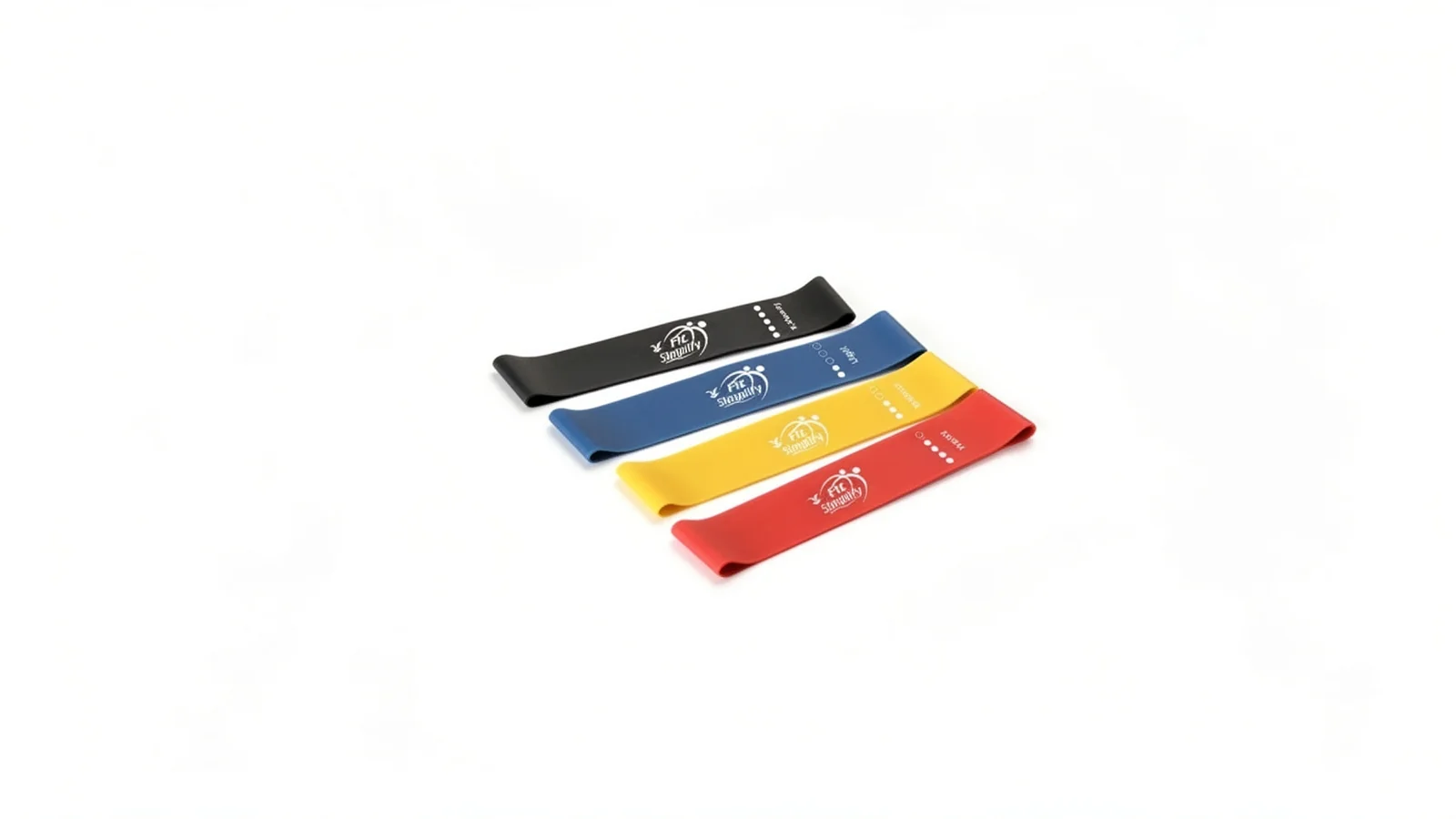
Fit Simplify Resistance Bands Under $10: The Cheapest Way to Start Strength Training
Ten bucks for five resistance bands. I ran the cost-per-use math against $35 fabric sets and a $50 monthly gym. The numbers are not close.
 The Budget Hunter Apr 15
FITRELL 20-30mmHg Compression Socks Review: Honest Compression At A Three-Pack Price
Three pairs of 20-30 mmHg compression socks for $27. I wore them through long runs, recovery days, and a 12-hour flight to see if the rating is real.
The Fitness Guru Apr 15