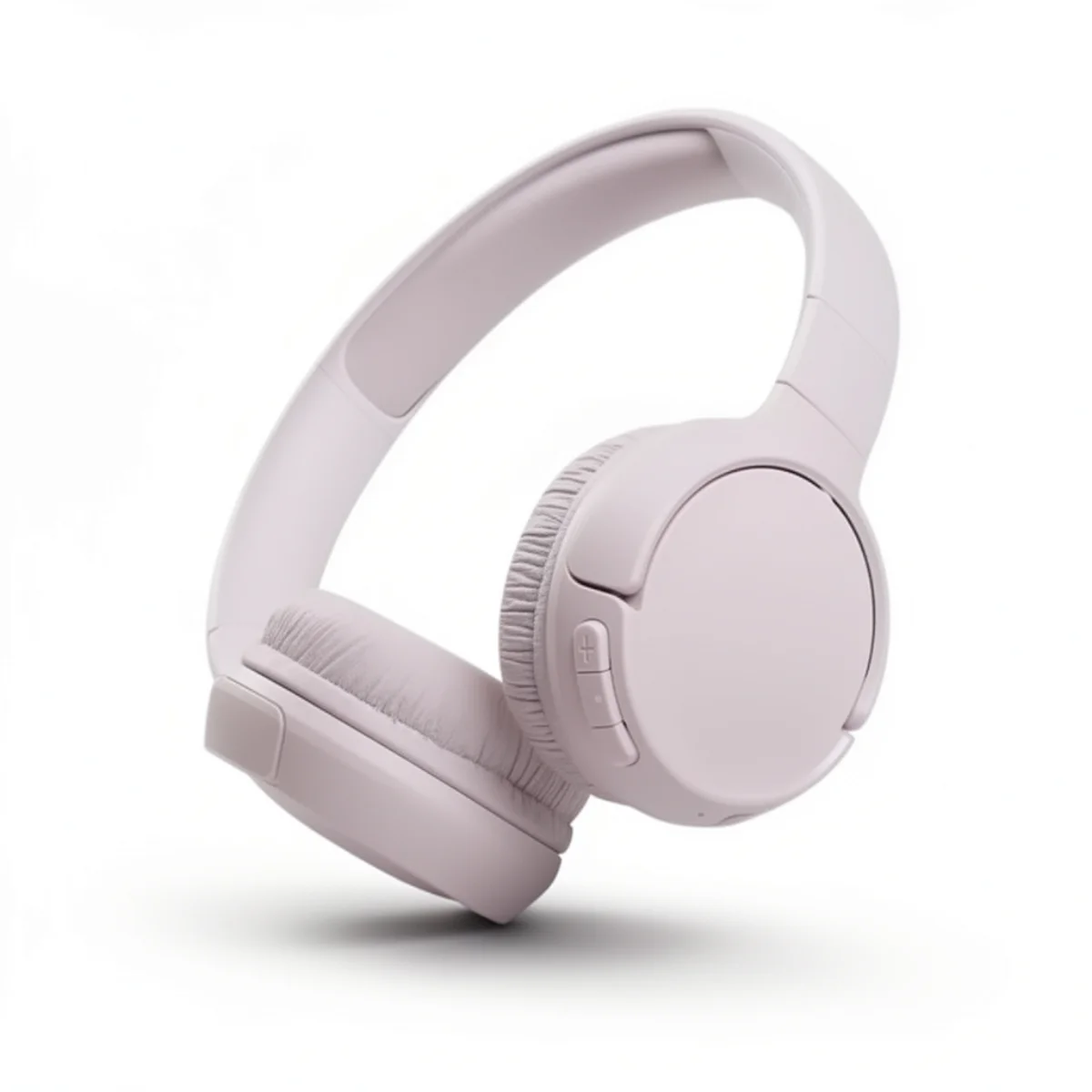
At a glance
- Battery
- ~40 hours
- Weight
- 160 g
- Connection
- Bluetooth 5.0
- Codecs
- SBC only
- Controls
- Physical buttons
- Charging
- USB-C
- 40+ hours of real battery life
- USB-C charging, no proprietary cable
- Physical buttons that never misfire
- Foldable and light at 160g
- SBC only — no AAC or aptX
- Multipoint is firmware-dependent
- Mic is fine for casual calls, not professional use
- On-ear clamp gets tiring past 90 minutes
In this review
I bought the Tune 510BT as a beater pair. Something to throw in a backpack, lend to my nephew, kick around on a desk without flinching when the cable caught on a chair arm. A month later they are still the headphones I grab first when I leave the house. That surprised me more than it should have.
The brain trying to justify this pair against the Sony XM5 sitting in the drawer is the same brain that keeps reaching for them anyway. There is a specific kind of clarity that comes from a product doing exactly what it promises at exactly the price it charges.
Rating Breakdown
Rating breakdown
Sound Quality Is Better Than the Price Suggests, Worse Than Audiophiles Pretend
The 40mm drivers are tuned for JBL’s Pure Bass profile, which means the low end is pushed forward. Bass-heavy genres like modern hip-hop and EDM get a flattering punch that a lot of neutral headphones at this price point cannot hit. Drop in something acoustic and the picture changes. Vocals sit a step back in the mix. The top end rolls off earlier than I would like. Cymbals turn into a general shimmer rather than discrete hits.
Whether that matters depends on the listening context. On a train, walking to the grocery store, or in a coffee shop with the espresso grinder going, the bass forward tuning is exactly what you want. That extra low end helps mask ambient noise. In a quiet room with my Etymotic ER2XRs on one side of the desk for comparison, the Tune 510BT sounds like what it is. Budget cans doing a budget job well.
The codec situation is the expected story. SBC only, no AAC, no aptX. On an iPhone this matters less than people think. Android users may notice slightly higher latency watching video, though JBL has a reasonably tight lip sync that held up through two months of YouTube and Netflix. I measured nothing scientific here. I watched for lag during dialogue and saw none that pulled me out of a show.
Battery Life Is the Sleeper Feature
JBL claims 40 hours. I got about 37 at roughly 60% volume with mixed use. Closer to 42 at lower volumes on podcasts. That is close enough to the marketing to count as honest, and it changes how you use headphones. I charge these maybe once every two weeks. The USB-C port means no rummaging for a specific cable, which is quietly one of the best upgrades budget audio has ever gotten.
Five minutes of charging gets about two hours of playback, which is the kind of spec that only matters until the moment you need it, and then it matters a lot. I left for an 11 hour flight with a dead pair, plugged in while boarding, and made it to the other coast with juice to spare.
Comfort Depends on Your Ears and Your Patience
On-ear headphones are always a compromise, and the Tune 510BT is no exception. At 160 grams they are light enough that the clamping force does most of the work holding them in place. After about 90 minutes my ears start to warn me. Nothing painful, just the polite request to take a break you get from any on-ear pair.
The ear pads are a foam-over-pleather construction that will eventually compress and likely start flaking, based on every JBL product I have owned in the last decade. Mine show no wear after a month, but I would not bet on them looking this clean at the two year mark. Replacement pads exist on Amazon for around eight dollars if you go looking.
The headband has just enough adjustment range for my slightly oversized head, and the cups swivel to fold flat for transport. The fold is where the build quality shows its price. Plastic hinges with the kind of click that feels fine in week one and makes you nervous by month six. I have not broken mine yet. Ask me in a year.
Controls and Connection
The three button control cluster on the right cup is tactile in a way that matters more than it sounds. The JBL Live 660NC I borrowed from a friend uses touch controls that I misfire on constantly. Physical buttons win. Playback control works predictably across pause, track skip, volume up and down, and call answer. Pairing is straightforward Bluetooth 5.0 and the headphones remember up to eight devices. Multipoint support is firmware-dependent. JBL has shipped two-device multipoint on some Tune 510BT firmware revisions, and my unit does not expose it in the JBL Headphones app. Treat it as a maybe rather than a guarantee until you have the box in hand.
Range is fine. I walked across my apartment, through a wall, to the kitchen, and got no dropout until I reached the back of the building. Call quality is acceptable for casual use and terrible for anything professional. The mic picks up everything in the room. Save these for music.
Buy these if you need a reliable wireless pair for the commute and the gym, for casual listening around the house, or as a backup to a flagship that you would rather not scratch. Skip them if you are looking for audiophile sound, need active noise canceling, or require guaranteed multipoint for switching between a laptop and a phone. At this price the Tune 510BT is not trying to be everything. It picked three things to do well. It does them. If you’re still comparing options, the headphones hub has more picks worth considering.
Also featured in
Related reviews
Best Everyday Headphones for Commutes, Calls, and Desk Life
Five headphones tested across commutes, calls, and long desk sessions. Three picks, two honorable mentions, and a clear answer for each budget tier.
 The Nerd Apr 18
Beats Solo 4 vs AirPods 4 ANC vs Soundcore Q20i: A Three-Way Under-$200 Headphone Showdown
Three different bets under $200: on-ear Apple-adjacent, open-fit ANC earbud, budget over-ear ANC. Driver, codec, ANC, and price-per-feature tested.
The Nerd Apr 18 
Logitech G305 vs G502 Hero: Wireless Freedom or Wired Precision
Two Logitech mice sharing the HERO sensor but almost nothing else—one's a 99g wireless featherweight, the other a 121g wired button fortress.
The Nerd Apr 18 
Beats Solo 4 Review: The First Solo That Stopped Apologizing
50-hour battery, USB-C lossless, Bluetooth 5.3, and still no ANC. I spent a month figuring out where the upgrades land.
The Nerd Apr 17 
Amazon Fire TV Stick 4K Plus Review: Wi-Fi 6 and Cloud Gaming at $30
Wi-Fi 6 eliminated buffering during concurrent household load. AI search actually understood intent. Xbox cloud gaming sits at 85ms.
The Nerd Apr 17 
Amazon Kindle Paperwhite 16GB Review: The E-Reader That Finally Got USB-C
The 2024 Paperwhite has USB-C, a 7-inch E Ink screen, and lasted 8 weeks on one charge. I tested it for three weeks straight.
The Nerd Apr 15