In this review
The bathroom mirror in my apartment has this brutal overhead light that makes every pore look like a small crime scene. That is where I noticed it first, on a Tuesday morning about three weeks into testing this toner. My skin looked lit from somewhere behind itself. Not foundation-glow. Not filter-glow. Just even.
I have been burned by The Ordinary before. A few of their products oversell in one direction and undersell in another. So I went in skeptical. Six weeks later, I am writing this with the bottle two-thirds empty and a sticky note on my mirror that says “WEDNESDAY ONLY” to keep me from overdoing it.
The Ordinary Glycolic Acid 7% Exfoliating Toner
A 240 mL bottle of 7% glycolic acid with Tasmanian pepperberry, aloe, and ginseng. Fragrance-free, evening-only, and absurdly cheap for what it does. Sold as a toner but acts more like a leave-on chemical exfoliant. Requires real SPF discipline the next day.
Rating breakdown
The testing context
Combination skin, leans oily through the T-zone by mid-afternoon. I tested from early February through mid-March in a city that swings from dry radiator air to humid summer, so four of the six weeks were dry indoor heat.
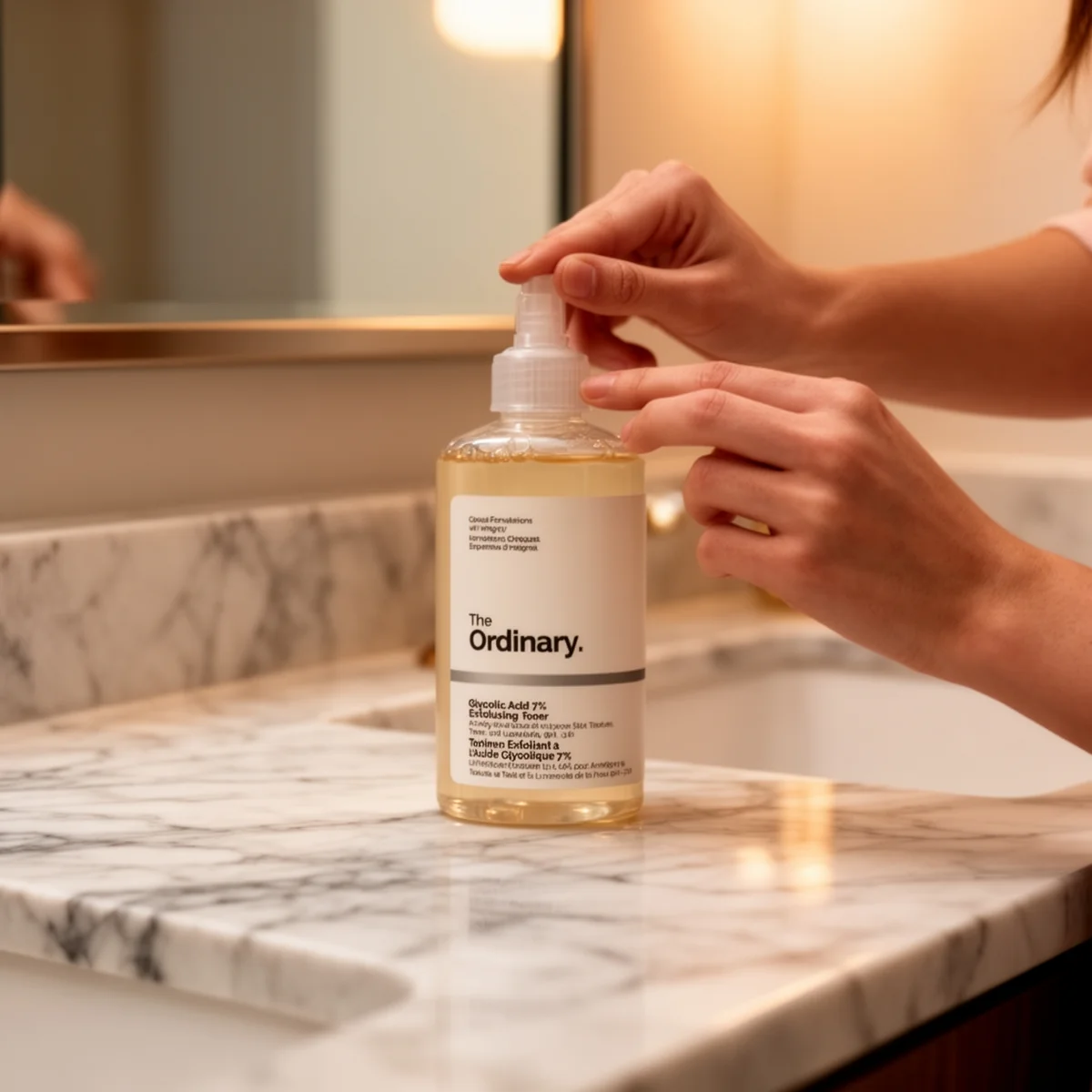
My routine stayed almost the same. Morning: gentle gel cleanser, hyaluronic serum, ceramide moisturizer, mineral SPF 50. Evening: the same cleanser, this toner three nights a week, moisturizer every night, and a retinol I dropped for the duration to avoid stacking acids. Discipline, not experimentation.
I patch-tested on the inside of my jaw for four consecutive nights. No reaction. Then I moved it to the full face on week one, twice that week only. Week two was three times. Weeks three through six stayed at three.
What the first week actually looked like
The first application had a small tingle, maybe ten seconds of mild warmth across the cheeks. Nothing dramatic. The texture is watery, almost a thin fruity-vinegary liquid. A few drops on a cotton pad absorbs in under a minute, and it does not leave the tacky residue some acid toners have.
By the end of week one, my skin felt smoother to the touch. Not brighter yet. Smoother. The kind of smoothness you feel when you wash your face and your fingertips slide in a way they did not before.
A confession. In week two, on a Friday, I used it two nights in a row because I had a thing on Saturday and wanted the “glow.” That Saturday my cheeks were tight and slightly pink by lunch, and by Sunday I had a small dry patch near my left nasolabial fold that took five days to heal. Do not do what I did. The bottle says once daily in the evening, and even that is aggressive for most people. Three nights a week is the move.
Week three is when the mirror stopped lying
Around day nineteen, a post-acne mark near my jaw that I had been ignoring for months looked lighter. Not gone. Lighter. Under the bathroom overhead it was still visible, but under normal lamp light at my desk I could not find it without looking for it. A faint sun freckle on my cheekbone also shifted. I noticed that one while putting on concealer because I did not need as much.
This product does not erase pigmentation. What it does is speed the natural cell turnover on your face so the marks you would have lost in six months fade in three or four weeks, if you are consistent and you wear SPF like your skin depends on it. Because it does.
By week five my pores around the nose looked smaller in mirror-light, and my skin tone evened out enough that I stopped reaching for color-correcting primer in the mornings. The texture change was the biggest win for me. My skin felt clean in a different way. Not stripped. Clean.
The ingredient list, and what actually matters
The front label says 7% glycolic acid, and that is the one that does the work. Glycolic is the smallest AHA molecule, which means it penetrates faster and more aggressively than lactic or mandelic. That is why it works quickly. That is also why it can be harsh if you are careless.
The other two names worth knowing are Tasmanian pepperberry and aloe. Pepperberry is an anti-irritant Deciem added specifically to take the edge off the glycolic. It does not neutralize the acid, but it softens the sting for sensitive users. Aloe and ginseng round it out with a little hydration buffer.
What is not in the bottle matters too. No fragrance, no alcohol denat, no essential oils, no dyes. Fragrance in a chemical exfoliant is a recipe for reactive skin, and a lot of drugstore acid toners still include it.
The pH sits around 3.5 to 3.6 based on what Deciem has publicly said about the formula. That is the range glycolic needs to actually exfoliate. A lot of gentler “glow” toners float around pH 4.5 and above, which is why they feel mild and do not do much.
The rules that make this product work
This is where most people get into trouble. Glycolic acid is not a moisturizer. It is an exfoliant. The better it works, the thinner and more photosensitive your skin becomes in the short term. There is no safe way to use this product without SPF the next day. Not “I mostly wear sunscreen.” Every single day. Reapplied. Or you will undo every bit of progress and add new pigmentation on top.
Rules I followed, in order of importance.
- Evening only. Always.
- Three nights a week max. Two if you have drier or more reactive skin.
- Never on the same night as retinol, vitamin C, or any other acid.
- Always follow with a moisturizer, not just serum.
- Broad-spectrum SPF 30 minimum the next morning. I used SPF 50.
- Avoid the eye area, the corners of the nose, and any broken skin.
- Do not use on sunburn, day-of waxing, or within 48 hours of any in-office treatment.
The off-label uses are real. I tested the scalp claim on two weekends, applied along my part line with the pointed nozzle. Less flaking, less itch. Useful. I did not test the underarm use because I did not want another variable running at the same time.
Who should buy this, and who should not
This works for you if your skin tolerates actives, you have visible uneven tone or texture, you want a cheap and honest way to start chemical exfoliation, and you will actually wear sunscreen. Combination and oily skin types will get the fastest visible results. Normal skin types will see slower but steady improvement.
Skip this if your skin is reactive, rosacea-prone, currently using prescription retinoids, or freshly out of any resurfacing treatment. Start with a lactic acid toner first, around 5%, and work up. Also skip if you know you will not commit to daily SPF. This product plus bare sun equals new problems.
Pregnant or nursing readers should ask their doctor. Glycolic is generally considered okay in pregnancy, but the “generally” is doing work in that sentence, and I am not qualified to make that call for anyone.
The price question
At roughly $17 for 240 mL, this is one of the cheapest effective acid toners on the market per milliliter. Pixi Glow Tonic, which is the comparison everyone reaches for, uses 5% glycolic in a 100 mL bottle for around the same price. The Ordinary gives you more than twice the volume at a higher, more effective concentration. Paula’s Choice and other brands run $35 and up for less active product.
The formulation justifies the price tag regardless of what the bottle costs, and the bottle happens to cost very little. That combination is rare in beauty.
A quieter note on how I use it now
I kept the “WEDNESDAY ONLY” sticky note after the test finished. Then I added Sunday. Two nights a week, every week, ongoing. My dermatologist looked at my current routine last month and nodded at exactly one thing without comment. It was this.
If you’re looking for more gentle skincare options to start with, check out our full skincare category for beginner-friendly picks.
Also featured in
Related reviews
Best Affordable Skincare Under $30: The Bathroom Counter Edit That Actually Works
The glycolic toner that faded a post-acne mark by week three, the $4.75 mask that gives glass skin, and the asterisks on the jar.
 The Glam Apr 18
BIODANCE Bio-Collagen Real Deep Mask Review: Glass Skin or Glorified Sheet
Eight weeks, one mask a week, half in the fridge. The glass-skin claim holds for thirty-six hours. The slippage is real.
The Glam Apr 15 
eos Shea Better Vanilla Cashmere Body Lotion Review
A woman in line asked what perfume I was wearing. I wasn't wearing any—just this $6 body lotion, eight hours after application.
The Glam Apr 15 
Maybelline Sky High Mascara Review: Length Queen, Volume Pretender
Six weeks of Sky High testing. What the Flex Tower wand actually does, where fibers flake, and why this is a length mascara dressed as volume.
The Glam Apr 15 
Medicube Zero Pore Pad 2.0 Review: Six Weeks on Combination Skin
Six weeks of testing the dual-textured K-beauty exfoliating pad on combination skin. Pore results are real. The alcohol in the formula is also real.
The Glam Apr 15 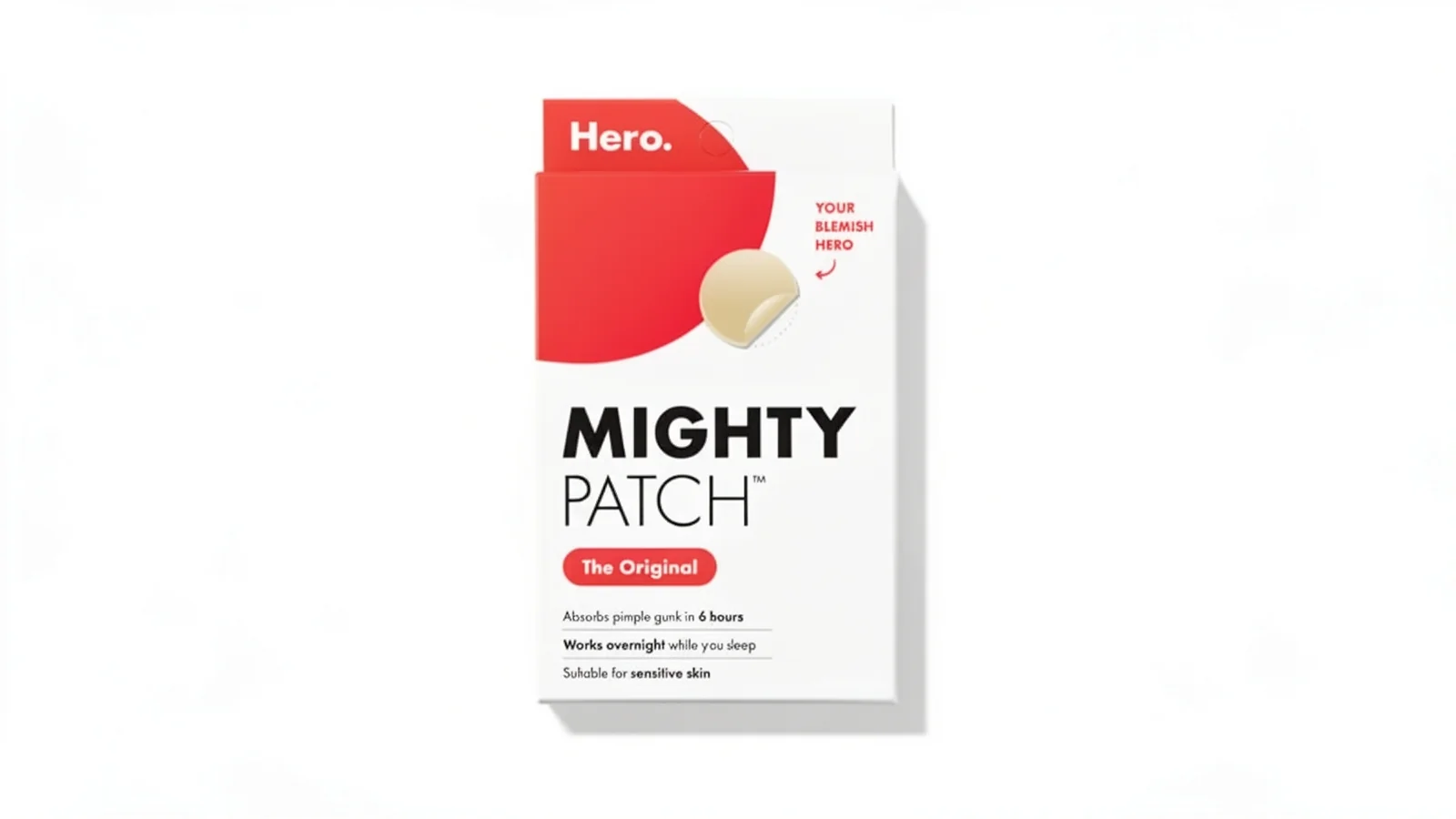
Mighty Patch Original Review: The Sticker That Earns Its Shelf Space
Six weeks of patching every whitehead. Average flatten: seven hours. Here's what these hydrocolloid dots actually do.
The Glam Apr 15