In this review
The night before a work event, I felt one coming in. That specific heat under the skin on the side of my chin, the kind my face reserves for occasions where I actually need to look presentable. I wasn’t going to out-skincare my way through it in eight hours. I stuck a Mighty Patch over it around 10 PM and went to bed annoyed.
By morning the patch had turned cloudy in the middle. Not dramatic. Just a quiet little white dot where the bump used to be pushing against the sticker. I peeled it off, and what was a tender red threat the night before was flat, still pink, covered by a skim of foundation in four seconds. That was week two of testing. I’ve been patching whatever dares show up ever since.
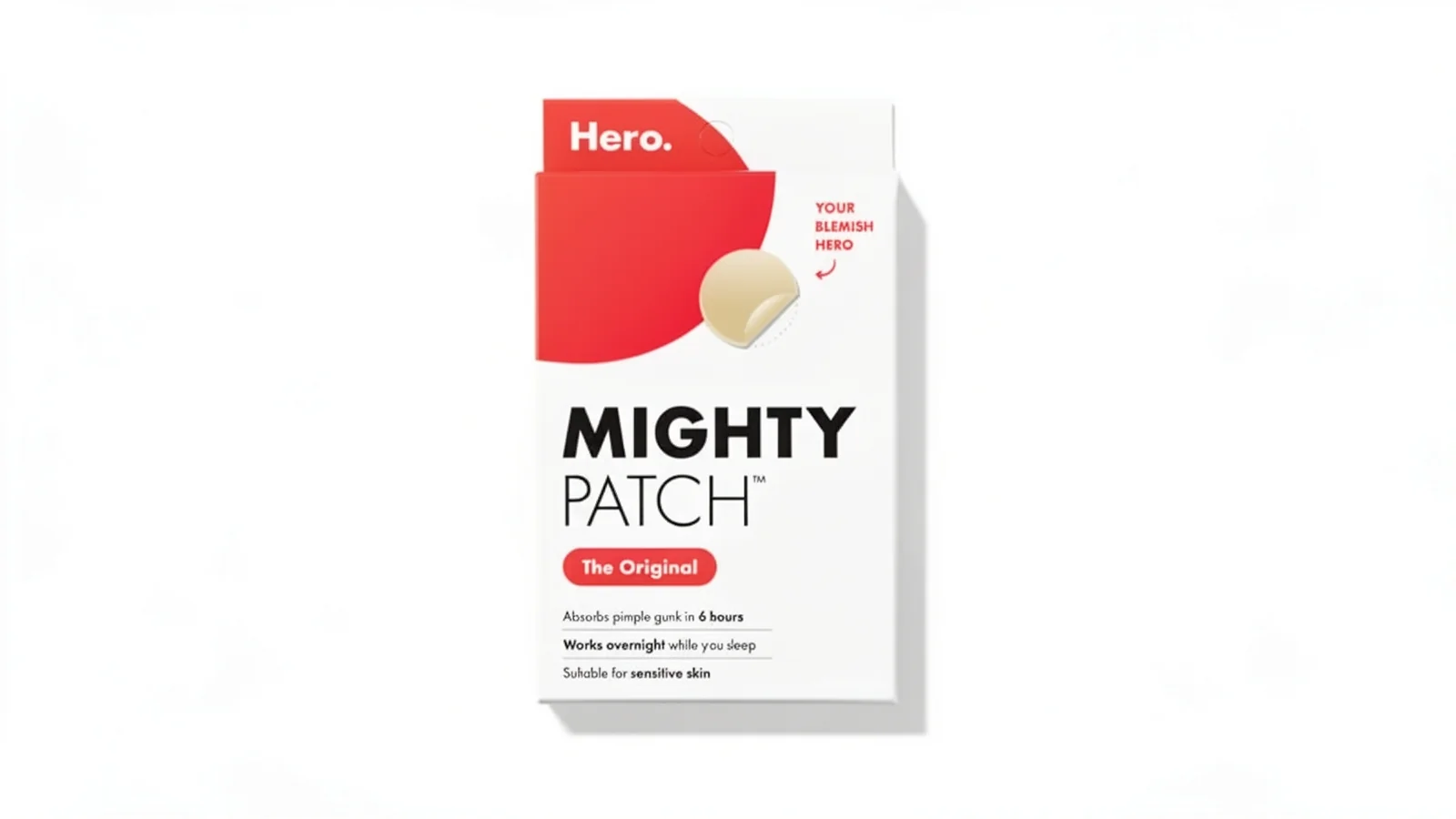
Mighty Patch Original Acne Pimple Patches
Hero Cosmetics’ 36-count hydrocolloid sticker pack. Two sizes, translucent matte finish, no actives. Absorbs fluid from surfaced whiteheads overnight. Useless on anything that hasn’t come to a head, and that is physics, not a flaw.
Rating breakdown
Testing Context
Combination skin, oily T-zone, dry cheeks. I live in a dry apartment with aggressive radiator heat in winter and a fan running most of the year. My routine during testing was a gentle cleanser, azelaic acid twice a week, niacinamide serum, a ceramide moisturizer, and SPF in the morning. No retinol in the weeks I was patching, because retinol-inflamed bumps are a different animal and I wanted clean data.
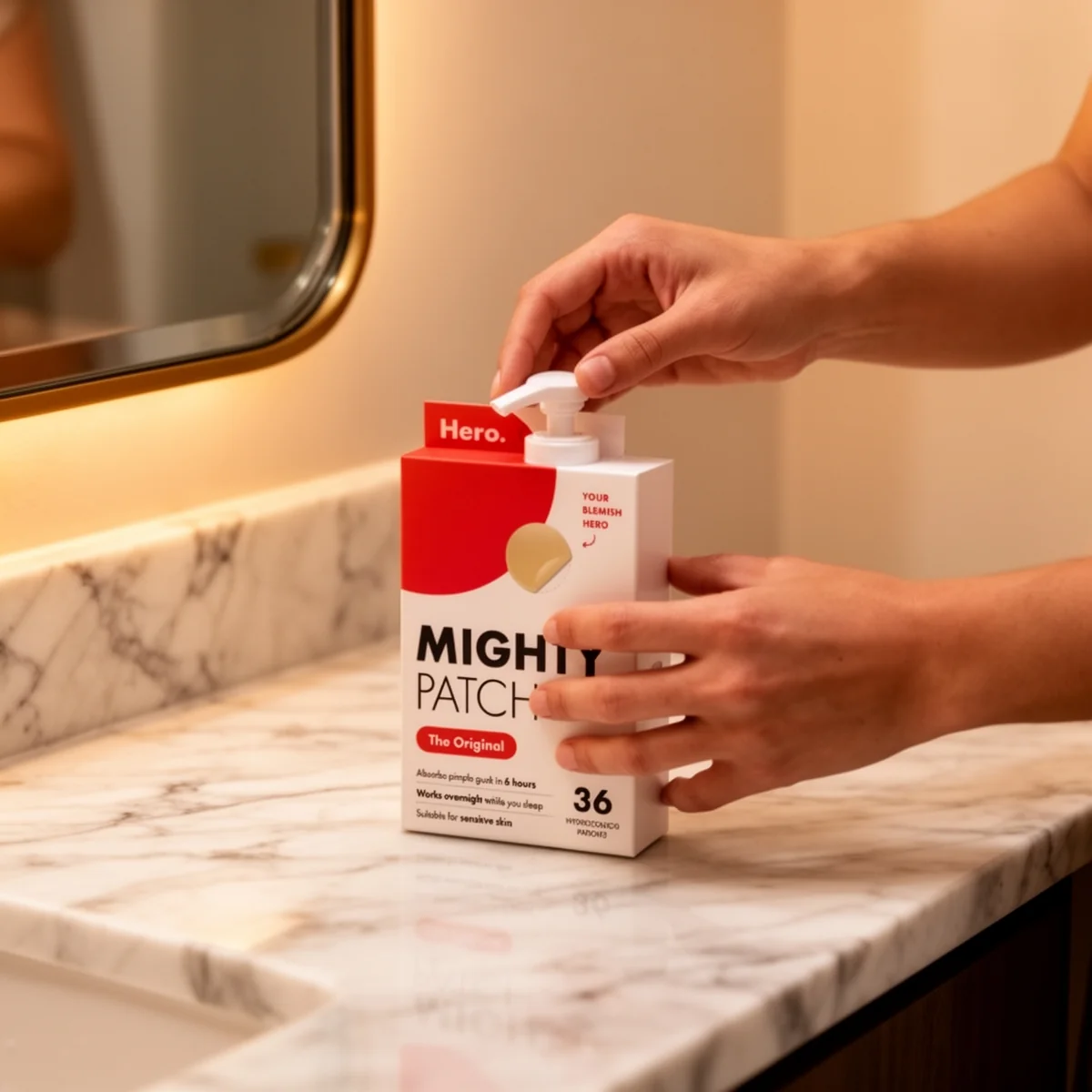
I tested for six weeks. Roughly fifteen patches used, mostly on whiteheads around the chin and jaw, a few on the side of my nose, two disasters near the hairline that I’ll get to.
What Actually Happens Overnight
The science is boring and that is the point. Hydrocolloid is the same material in wound-care bandages. It absorbs fluid. When a whitehead has surfaced, meaning the pus has migrated to the top layer of skin and you can see a white or yellow center, the patch pulls that fluid out through osmosis over six to eight hours. By morning, the patch has turned opaque where it was absorbing, and the bump is noticeably flatter.
I timed it on four separate blemishes. Average flatten-from-angry-to-manageable: about seven hours. The one that was already leaking before I patched it was nearly gone by morning. The one I patched too early, before it had surfaced, looked identical when I peeled the sticker off.
A Mighty Patch does not treat acne in any active sense. It absorbs what is already trying to leave the skin. When the bump is blind, cystic, or still forming under the surface, the patch does nothing.
Ingredients and Why That Matters
There are no active ingredients. Not salicylic acid, not benzoyl peroxide, not tea tree oil, nothing. Just medical-grade hydrocolloid with adhesive polymers and a plastic backing.
The blank ingredient list is the whole reason some people can use this when they can use nothing else. I have friends who can’t use salicylic acid spot treatments without their skin reacting. My pregnant sister texted me last year asking what she could use on her chin breakouts. Mighty Patches were the answer, because nothing in them crosses the skin barrier in any meaningful way. You are putting a medical bandage on your face.
For anyone doing a heavy actives routine, retinol nightly, strong AHAs, these patches also solve a different problem: you can spot-treat a whitehead without stacking another irritant on an already sensitized spot.
Adhesion, Visibility, and Real-World Wear
The 10mm and 12mm dots stay on through a full night if you apply them to genuinely dry skin with no skincare residue underneath. If your moisturizer hasn’t fully absorbed, or if you have an oily T-zone and you patched over the T-zone, the edges will lift by 4 AM. Two of my patches came off in my pillowcase. Both were on the sides of my nose, which is the oiliest part of my face.
Hairline patches are a lost cause. The stickers can’t grip skin that is constantly being brushed by hair movement, and the adhesive doesn’t play nicely with any residual hair product.
During the day, the matte finish disappears surprisingly well under foundation if you dab a thin layer over it. Under daylight and bare skin, you can see a slightly raised opaque circle if someone is looking for it. I wore a patch on my chin through a grocery run twice and nobody commented, which is either a good sign or a sad commentary on how much people notice each other. I’ll take either.
The Honest Limitations
Blackheads get nothing from this. Blackheads are oxidized sebum, not fluid. Hydrocolloid has nothing to absorb.
Cystic acne sits too deep. The bump hasn’t surfaced. There is no fluid at the top layer of skin for the sticker to pull out. A patch on a cyst is just an expensive beige dot that will annoy you for eight hours.
Hormonal jawline breakouts in the forming stage are another miss. If you patch the first day you feel one coming, you will be disappointed. Wait until you can see a white or yellow head, then apply. The day-two or day-three patch is where the magic happens.
Scarring and post-inflammatory marks are outside their job description. A patch prevents you from picking, which prevents new scars. It will not fade the marks you already have.
Who Should Buy These
If you get occasional whiteheads and you have a pattern of picking at them, this is worth every cent. The physical barrier alone saves your skin from the aftermath. If you have reactive skin, are pregnant or nursing, or layer strong actives and need a spot treatment that can’t irritate you further, there is nothing else on the market that does this job without a tradeoff.
Who Should Skip
If your acne runs deep or cystic under the skin, these will not help. You need a dermatologist and probably a prescription, not a sticker. If you pick up a pack expecting overnight miracles on blackheads or post-acne marks, you will leave a one-star review about how they did nothing. They were never going to.
One Scale Note
A 36-count pack runs around $13 at the time of this review. That works out to roughly 36 cents per patch. Drugstore and Target house-brand hydrocolloid dots run cheaper, sometimes by half, and from my informal testing on the same blemish split between the two, results are comparable. The Hero version has the cleanest backing material and the most reliable adhesion in my experience, but it is not magic. Pay the premium if the consistency matters to you. Save the money if you are buying in bulk and don’t mind occasional edge lift.
For more tested skincare that earns shelf space, browse our full skincare reviews.
Also featured in
Related reviews
Best Affordable Skincare Under $30: The Bathroom Counter Edit That Actually Works
The glycolic toner that faded a post-acne mark by week three, the $4.75 mask that gives glass skin, and the asterisks on the jar.
 The Glam Apr 18
BIODANCE Bio-Collagen Real Deep Mask Review: Glass Skin or Glorified Sheet
Eight weeks, one mask a week, half in the fridge. The glass-skin claim holds for thirty-six hours. The slippage is real.
The Glam Apr 15 
Maybelline Sky High Mascara Review: Length Queen, Volume Pretender
Six weeks of Sky High testing. What the Flex Tower wand actually does, where fibers flake, and why this is a length mascara dressed as volume.
The Glam Apr 15 
Medicube Zero Pore Pad 2.0 Review: Six Weeks on Combination Skin
Six weeks of testing the dual-textured K-beauty exfoliating pad on combination skin. Pore results are real. The alcohol in the formula is also real.
The Glam Apr 15 
Neutrogena Makeup Remover Wipes Review: The Drugstore Staple, Tested Honestly
Six weeks of nightly Neutrogena wipes. They clear 90% of waterproof mascara beautifully—then leave a film you'll want to rinse.
The Glam Apr 15 
eos Shea Better Vanilla Cashmere Body Lotion Review
A woman in line asked what perfume I was wearing. I wasn't wearing any—just this $6 body lotion, eight hours after application.
The Glam Apr 15