In this review
I stood in the garden aisle with a Felco 2 in one hand ($65) and a pair of Fiskars bypass pruners in the other ($12.98). My neighbor, who has been gardening in the same plot for twenty-two years, walked by. He glanced at the Felco. “Those are nice,” he said. Then he glanced at the Fiskars. “Those are the ones I’ve had since 2003.”
I put the Felco back.
That’s the whole review, really. But you probably want numbers.
Fiskars Bypass Pruning Shears
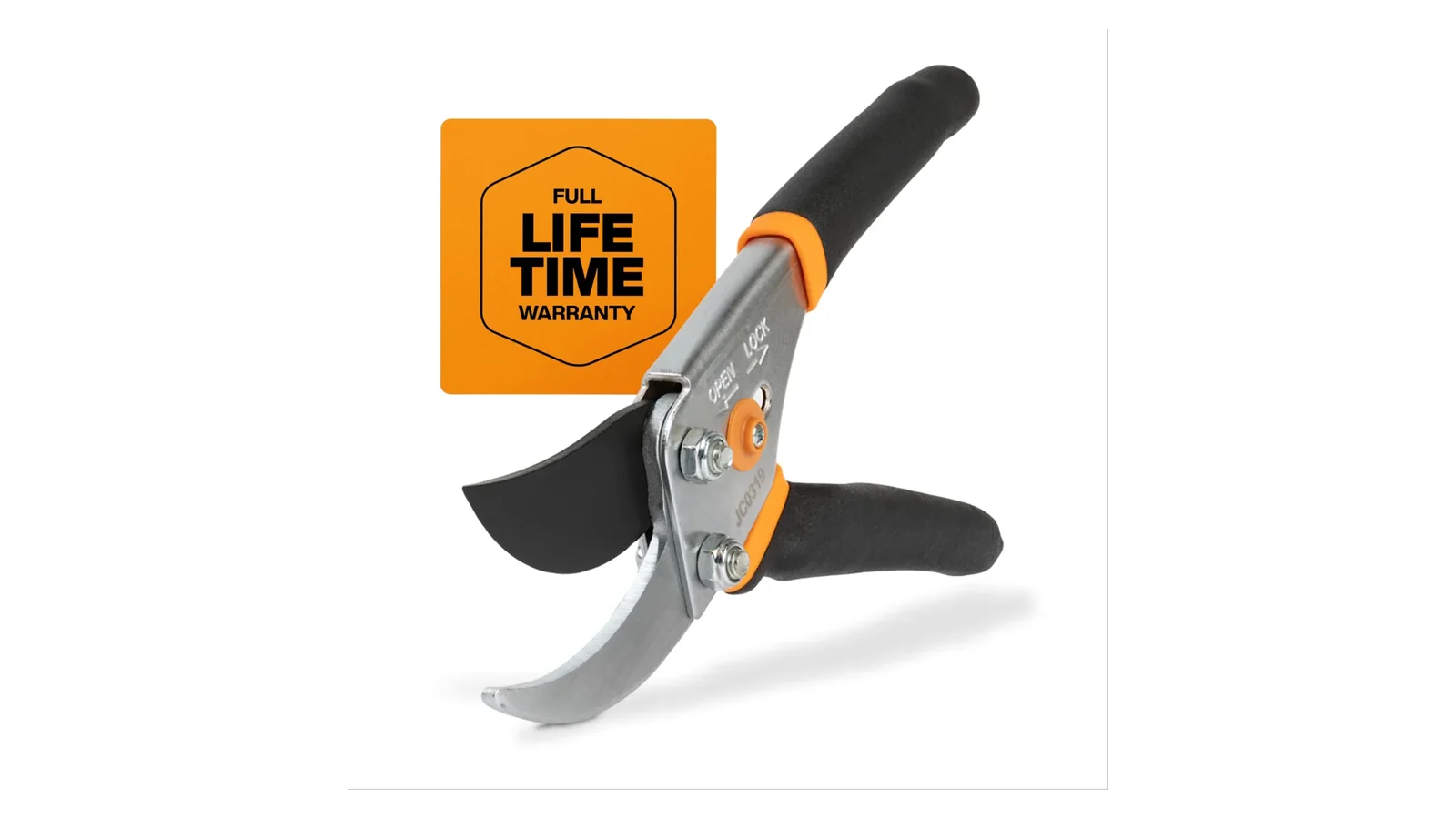
A 5/8-inch bypass pruner at $12.98 with 50,804 ratings averaging 4.6 stars. Steel blade, sap groove, safety lock, lifetime blade warranty. The category default, and it earned that position.
Rating breakdown
What $12.98 Actually Buys You
The Fiskars cuts live, green stems up to 5/8 inch wide. That covers roses, most shrub prunings, tomato vines, grape canes, and the thinner suckers on fruit trees. The blade is alloy steel with a low-friction coating. There’s a serrated edge, a self-cleaning sap groove, and a safety lock that works with one thumb.
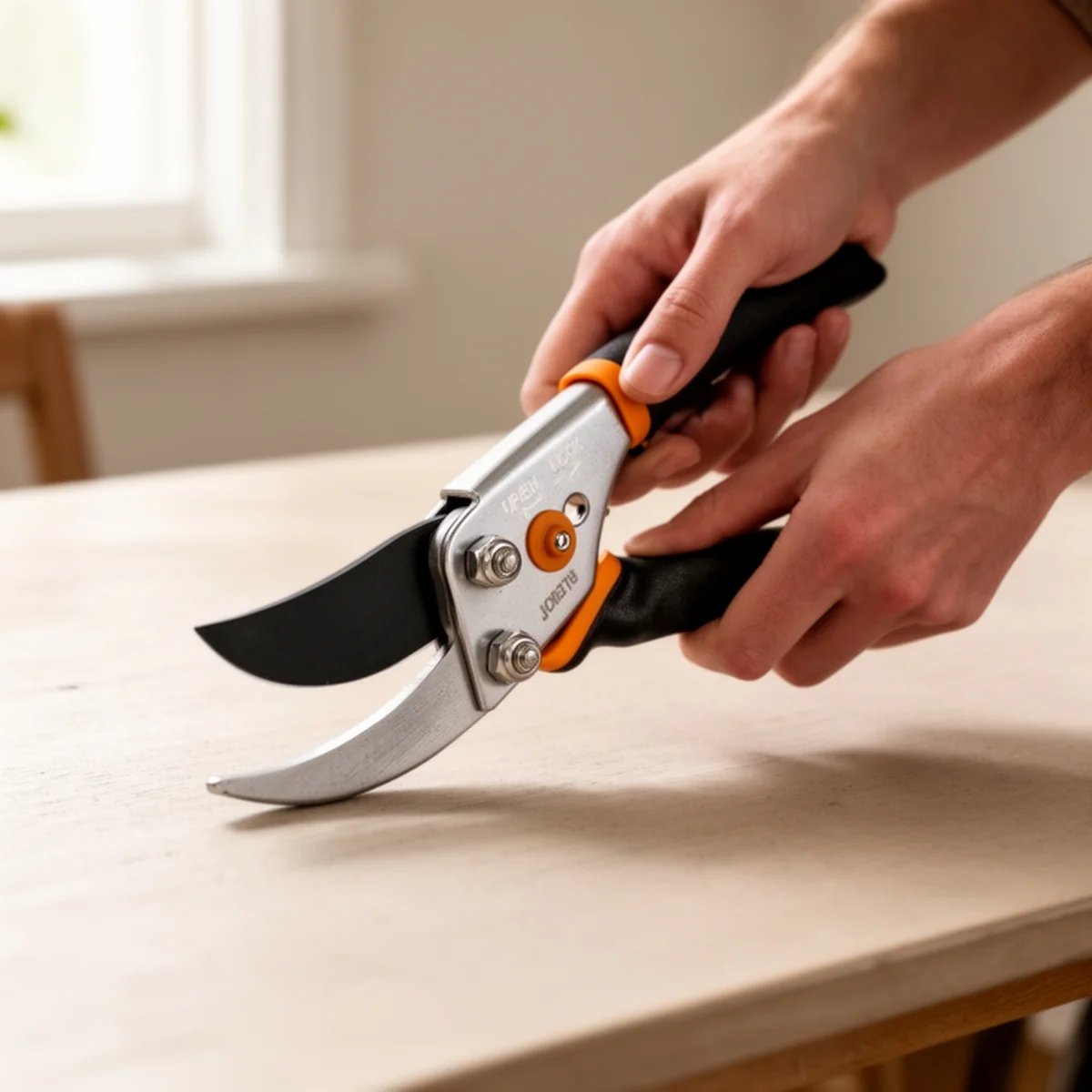
At 10.4 ounces, it’s light enough that an hour of deadheading doesn’t fatigue your grip. I timed myself on a rose pruning session last spring. Forty-two cuts in about nine minutes, no hand cramp.
The sap groove matters more than it sounds. I pruned fig suckers in July (sap everywhere) and the blade didn’t stick once. The cheaper Amazon clones I’ve tried at $7-9 gum up within five cuts and you spend the rest of the afternoon wiping resin off with a rag.
Where the Price Shows
You do give something up at this price point.
The locking latch is plastic. It works fine for years of normal use, but it’s the single failure point. A friend of mine snapped hers after using the pruners as improvised wire-cutters (don’t do that). The blade was fine. The latch wasn’t. Fiskars warranty covers the blade for life, but not the latch, so she paid another $13 rather than arguing.
The handle coating can peel if you leave these out in the rain all summer. Mine sat on a potting bench under a tarp for two years and the coating stayed put. Leave them exposed to weather and you’ll see flaking within a season.
The blade will not cut dead, dry wood over about 1/2 inch. Bypass pruners are designed for green stems; the two blades pass each other like scissors, which works beautifully on living tissue and bends or chips on hardwood. If you need to cut dry branches, you need an anvil pruner or a folding saw. That’s not a Fiskars problem. That’s a physics problem every $13 bypass pruner has.
One quieter concern: this SKU has been in production since the late 1990s, and some recent batches ship softer steel than the vintage units. I compared a 2019 pair (still sharp) to a 2024 pair I bought for this review. The new one held an edge through about 200 rose cuts before I noticed drag. The old one is still going after what my records suggest is closer to 800 cuts. Not a dealbreaker. Worth knowing.
The Felco Question
The Felco 2 costs $60 to $70 depending on where you look. It is a better tool. The blade is harder Swiss steel, every part is replaceable (you can buy a new spring, a new blade, new handles), and it will genuinely last thirty years of serious use.
The math: Felco is roughly 5x the price of the Fiskars. For a weekend gardener cutting a few hundred stems a year, the Fiskars covers 90% of what the Felco does. The Felco earns its money if you’re pruning professionally (orchard work, vineyard, landscaping crew) and making 500 cuts a day. For the rest of us, the gap between $13 and $65 buys you a replaceable blade and slightly less hand fatigue on long sessions.
I bought the Fiskars. I’d buy it again. If mine fails in 2028, I’ll buy a third pair for $13 and still be $26 under a single Felco.
The Cheaper Options Aren’t Cheaper
Here’s what I learned watching the price on this category for a few months. The Amazon-basic clones sell for $7 to $10. They look identical in photos. They use softer steel, weaker return springs, and flimsier pivots. I tested a $7 no-name pair last summer. The pivot bolt worked loose by week three. The blade rolled (rolled, not chipped) on a dogwood sucker that wasn’t even thick.
Cost per season on the clone: about $9, because you need to replace it mid-summer.
Cost per season on the Fiskars, based on my older pair: roughly $1.30. Amortized over roughly a decade of light-to-medium use.
The cheaper pruner is more expensive. That’s the whole argument.
Price Context
The Fiskars sits at $12.98 on Amazon most of the time. I watched it for two months. It dipped to $10.99 once, briefly, and spiked to $14.49 during the spring gardening rush. There’s no real “sale” to wait for. If you need pruners, buy them.
Corona makes a competitor (BP 3180D) at $15-18 that some orchard folks prefer; I haven’t used it long enough to have a take. The Fiskars PowerGear version runs $22 and uses a compound lever to multiply cutting force. If you have arthritis or grip issues, the PowerGear is worth the upgrade. For everyone else, the standard Fiskars at $13 is enough.
What I’m Still Wrestling With
Whether to buy a second pair and leave one in the shed, one in the garage. At $13, the answer probably is yes. A pruner you can’t find when you need it is worth zero.
Buy the Fiskars. Skip the $7 clones. Save the $50 you would’ve spent on the Felco for something that actually needs the upgrade budget, like a decent folding pruning saw or a pair of loppers.
If you’re building out a shed toolkit, check out our full DIY category for more budget-tested gear that lasts.
Also featured in
Related reviews
Grampa's Weeder Review: A 1913 Design That Still Wins
Sixty-six thousand ratings and a patent older than my grandfather. I pulled 60 dandelions in 90 minutes without kneeling once.
 The Handyman Apr 15
Best Budget DIY & Tool Picks: Seven Sub-$30 Items That Punch Way Above Their Price
Seven sub-$30 DIY picks I kept using: a 40-piece screwdriver kit, DeWalt drill bits, Fiskars pruners, bands, a mouse, paint, and a scale.
 The Budget Hunter Apr 18
DeWalt 14-Piece vs 21-Piece Titanium Drill Bit Sets: Which One Lives in the Drill Bag
The 14-piece rides in the drill bag for daily pilot work. The 21-piece fills the fractional gaps and stays in the shop.
The Handyman Apr 18 
Best Drill Bit Sets for Homeowners: A Handyman's Take
Three sets tested across a garage rack, a vanity swap, and a snapped grade-8 bolt. One for daily drives, one for size coverage, one for the steel that eats HSS.
The Handyman Apr 17 
DEWALT 14-Piece Drill Bit Set Under $15: The Budget Hunter's Take
A brand-name DEWALT drill bit set with 135-degree split points, for $14.79. I priced out the competition. Here's what $15 actually buys you.
The Budget Hunter Apr 15 
DEWALT DWA1184 14-Piece Drill Bit Set Review: A Handyman's Shop Take
The 1/8-inch bit cut sixty oak pilot holes without walking or burning. That's when I stopped thinking about drill bits.
The Handyman Apr 15