In this review
I killed a sourdough loaf last winter because I trusted my measuring cups. Seventy-two percent hydration on paper, closer to sixty after I weighed the flour and water later. The bread came out dense, chewy in the wrong way, and my partner ate it anyway out of mercy. I ordered the Etekcity Food Kitchen Scale that night for under twenty dollars and have not baked bread without it since.
That was eight months ago. The scale still works.
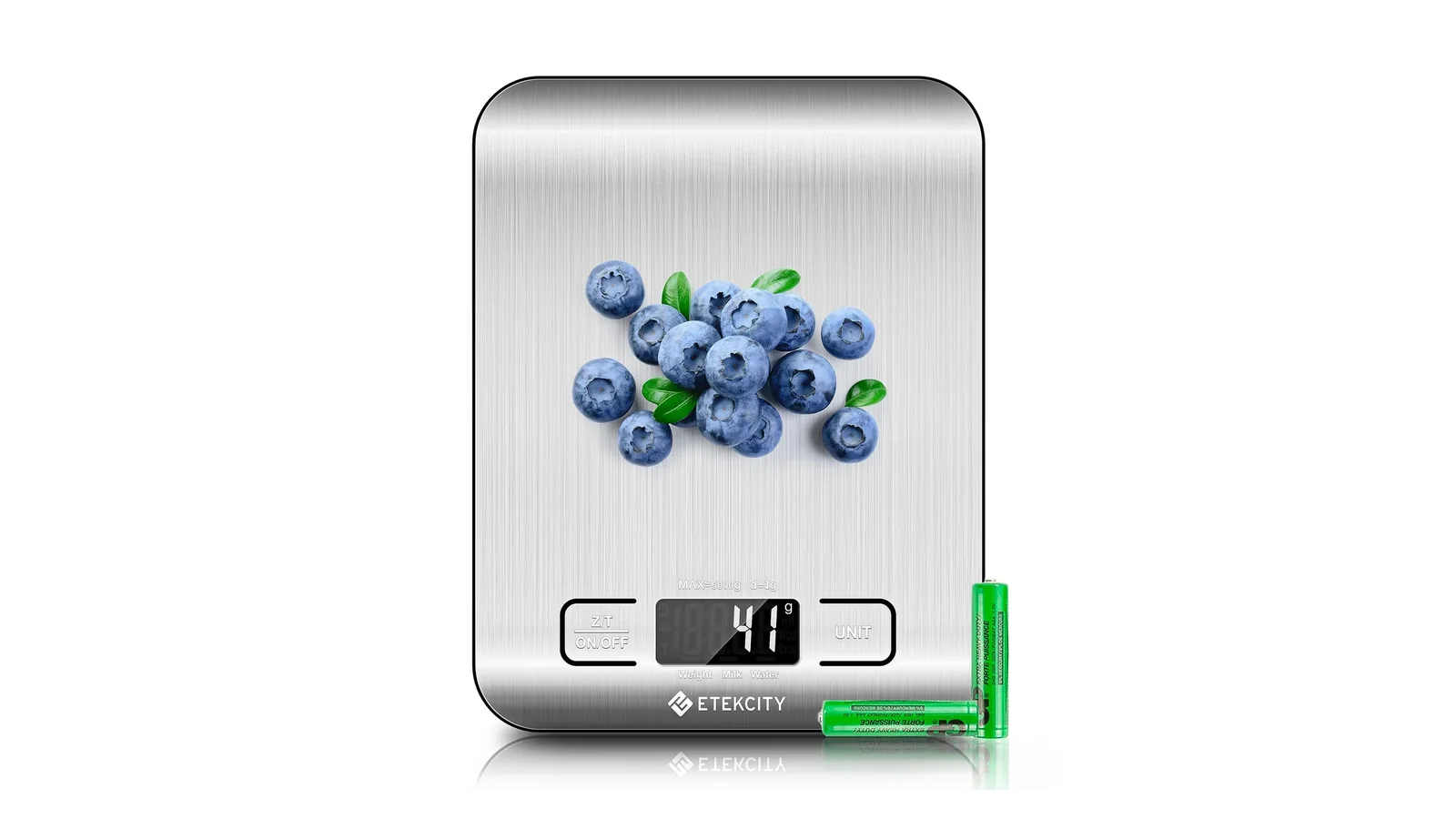
Etekcity Food Kitchen Scale
A 5kg digital kitchen scale with a 304 stainless steel platform, backlit LCD, and five unit conversions. Quietly accurate, cheap, and built for daily use. The only real gamble is long-term reliability, which is where Etekcity gets a mixed reputation.
Rating breakdown
What it actually does well
Two buttons. That is the entire interface. One turns it on and tares, the other cycles through grams, ounces, pounds-and-ounces, milliliters of water, and milliliters of milk. No menus, no pairing, no app. I bought a scale with an app once and returned it after I realized I was pressing four buttons to weigh a lemon.
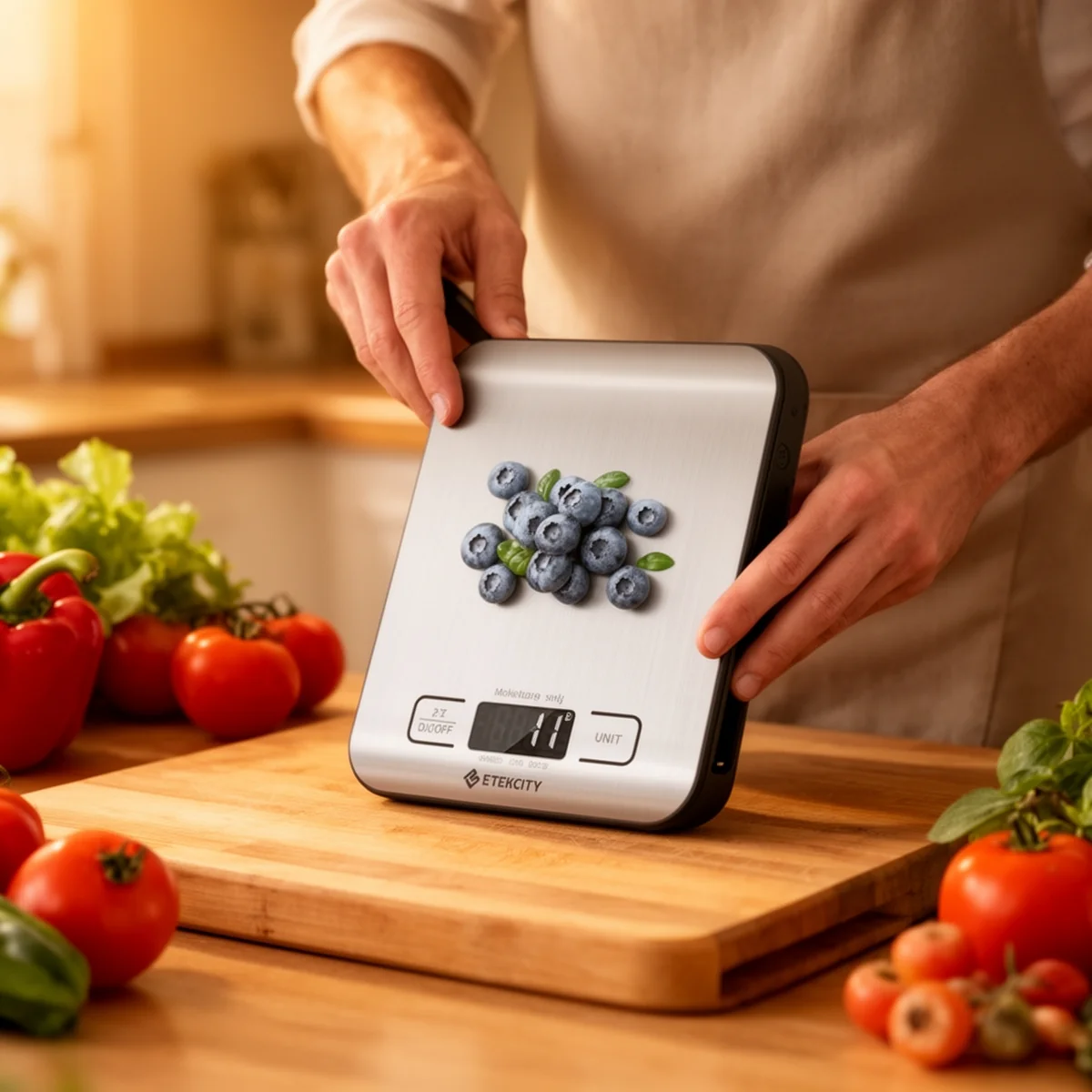
Accuracy is the thing you actually pay for with a kitchen scale, and this one reads to one gram consistently. I weighed an 18-gram espresso dose three times in a row, moving the basket on and off between pulls. It read 18, 18, 18. For a scale that costs less than a decent bag of coffee beans, that is all I need from it.
The backlit LCD sits recessed into the platform, which sounds like a small detail until you realize most cheap scales put the display on the edge, under the bowl, where you cannot see it. I pour slowly into a mixing bowl centered on the scale and still read the number. Digits are large enough to see at arm’s length, which matters when my hands are covered in dough.
The tare works exactly the way tare should work. Put a bowl down, hit the button, add flour, hit the button again, add water, hit the button again, add yeast. Four ingredients in one bowl, each weighed to the gram. This is the whole point of owning a scale, and Etekcity does not make you fight for it.
The failure test
I left a full mixing bowl on it for six minutes while I chopped herbs and grated parmesan. The scale auto-offs at two minutes. I came back, the display was dark, I lifted the bowl to tare again and lost my place in the recipe.
This is the only complaint I have that shows up in normal use. If you are the kind of cook who pauses to dice onions between ingredients, you will hit the auto-off more than you want to. I now tare, weigh the dry stuff fast, then step away. You adapt.
I also spilled coffee on it. A full espresso shot, poured by a toddler who wanted to help. I wiped it down with a damp cloth, checked the bottom for leakage into the battery compartment, found none, and it still works. The 304 stainless steel platform cleans up like a pan. No seams for flour to hide in.
Where reliability gets complicated
Look at the long-tail Amazon reviews and a pattern shows up. Roughly three percent of buyers hit a one-star wall, often around the one-to-two year mark. Battery contact corrosion. Readings that drift. A scale that weighs the same cup of water as 98 grams one day and 107 the next.
I have not hit that wall yet. Eight months in, mine reads accurately against a calibration weight I borrowed from a friend with a chemistry hobby. But the pattern is real enough that I would not buy this scale expecting ten years. I would buy it expecting three or four, which at this price is still cheaper than a single OXO.
The AAA batteries are the other honest friction. I go through a set maybe every six months with daily use. USB-C rechargeables exist at the same price now, and if that matters to you, look at Greater Goods. For me, two AAA batteries every six months is not a problem I am trying to solve.
How it fits a real kitchen
The platform is small. About seven inches across. That is fine for a mixing bowl, a small sheet pan, or a pour-over setup. It is not fine for weighing a whole tray of chicken thighs before roasting. I own a separate larger scale for batch prep on Sunday, and the Etekcity lives next to the coffee grinder for daily use.
It fits in a drawer. I have stored it flat under a stack of kitchen towels without worrying about it. The screen has not scratched, though I am not stacking cast iron on top of it either.
For coffee, it is the cheapest way I know to dial in a real 1:16 ratio. For baking, it is the difference between bread you post on Instagram and bread you eat over the sink. For meal prep and macro tracking, it is accurate enough that the numbers in your tracking app actually mean something.
Who should buy it, who should skip it
Buy this if you are weighing ingredients for the first time and want to find out whether you will stick with it. Buy this if you make coffee at home and want to stop guessing at bean dose. Buy this if you are prepping meals and tired of eyeballing portions of rice and chicken.
Skip this if you need a scale that weighs things under one gram. Pour-over coffee people chasing 0.1-gram precision on a bloom will want a dedicated coffee scale like the Acaia or a cheaper Timemore knockoff. Skip it if your counter already has a working scale and you are shopping on vibes.
Eight months ago I was measuring flour in a plastic cup and pretending I knew what I was doing. Now I weigh everything, and my bread has the open crumb I used to see in other people’s kitchens. The scale cost less than the bag of King Arthur bread flour sitting next to it. If you have been putting this purchase off, stop.
For more gear that earns its counter space, browse our full kitchen reviews.
Also featured in
Related reviews

Stanley Quencher vs HydroJug Traveler vs Owala FreeSip: Which Tumbler Actually Fits Your Day
Three tumblers on the prep counter at 6 a.m.: Stanley for the desk braise, HydroJug for the handle carry, Owala for the leak-proof bag toss.
 The Foodie Apr 18
Best Kitchen Essentials Under $40: Seven Small Upgrades That Actually Change How You Cook
Eight months testing seven sub-$40 kitchen tools across sourdough, spatchcocked chicken, and sheet pans. The three that changed how I cook.
The Foodie Apr 18 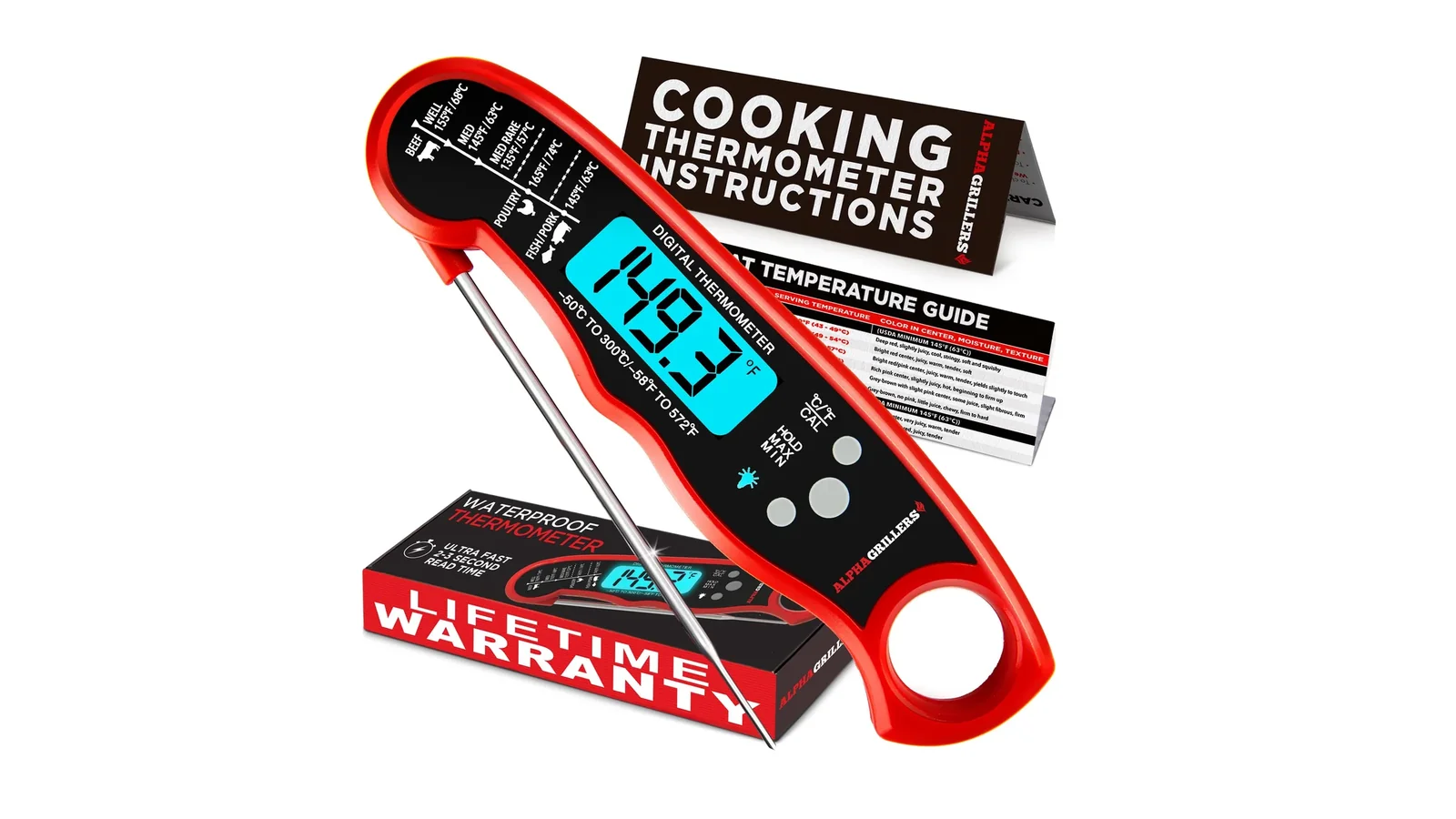
Alpha Grillers Meat Thermometer Review: The $13 Truth Teller
I tested this $13 instant-read thermometer for six weeks on everything from roasts to caramel. It reads in 2 seconds and never left me guessing.
The Foodie Apr 15 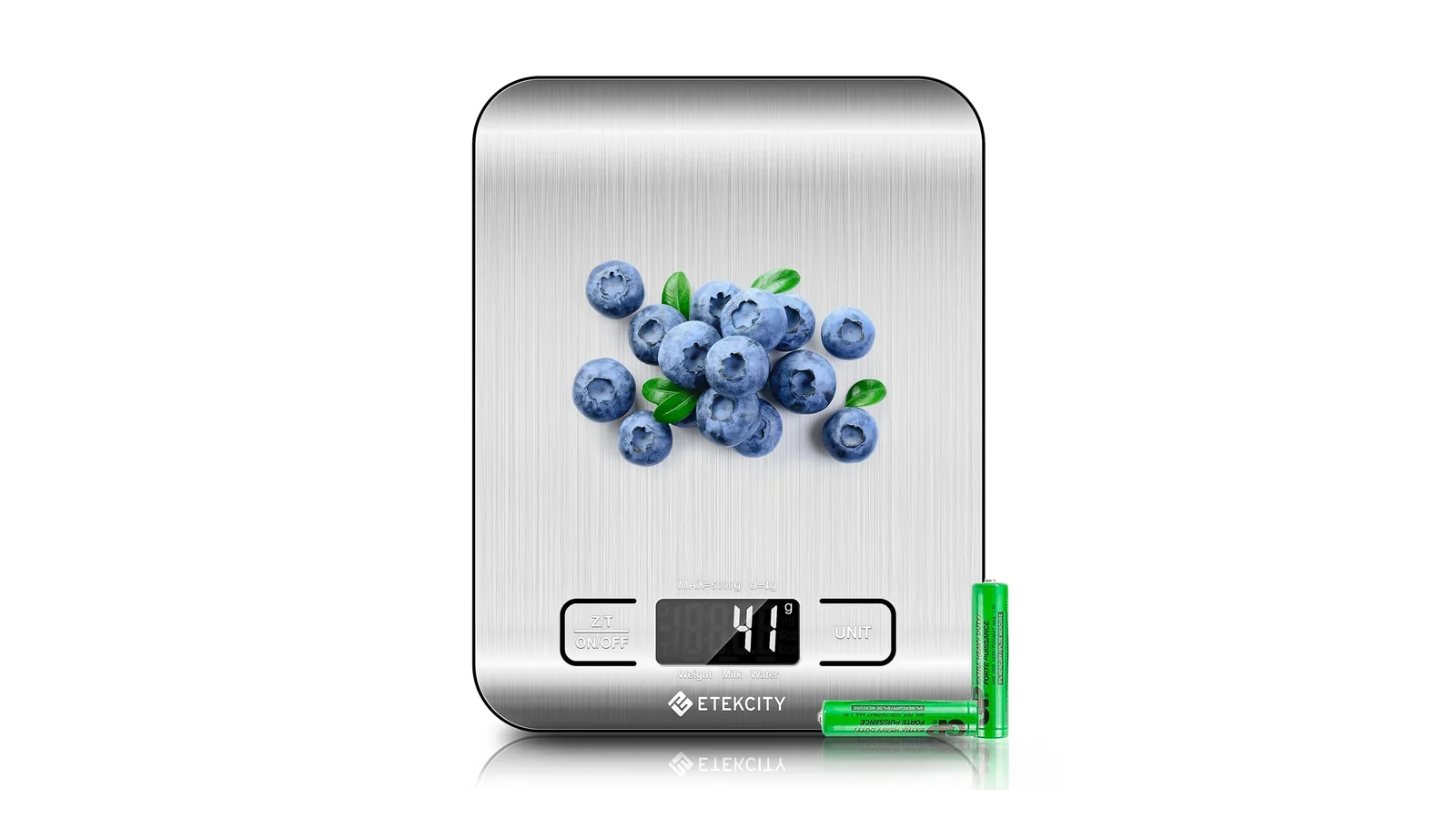
Etekcity Kitchen Scale: Best Value Under $14
The $14 Etekcity does 90% of what a $55 OXO does. I tested accuracy with calibration weights and ran the cost-per-use math.
 The Budget Hunter Apr 15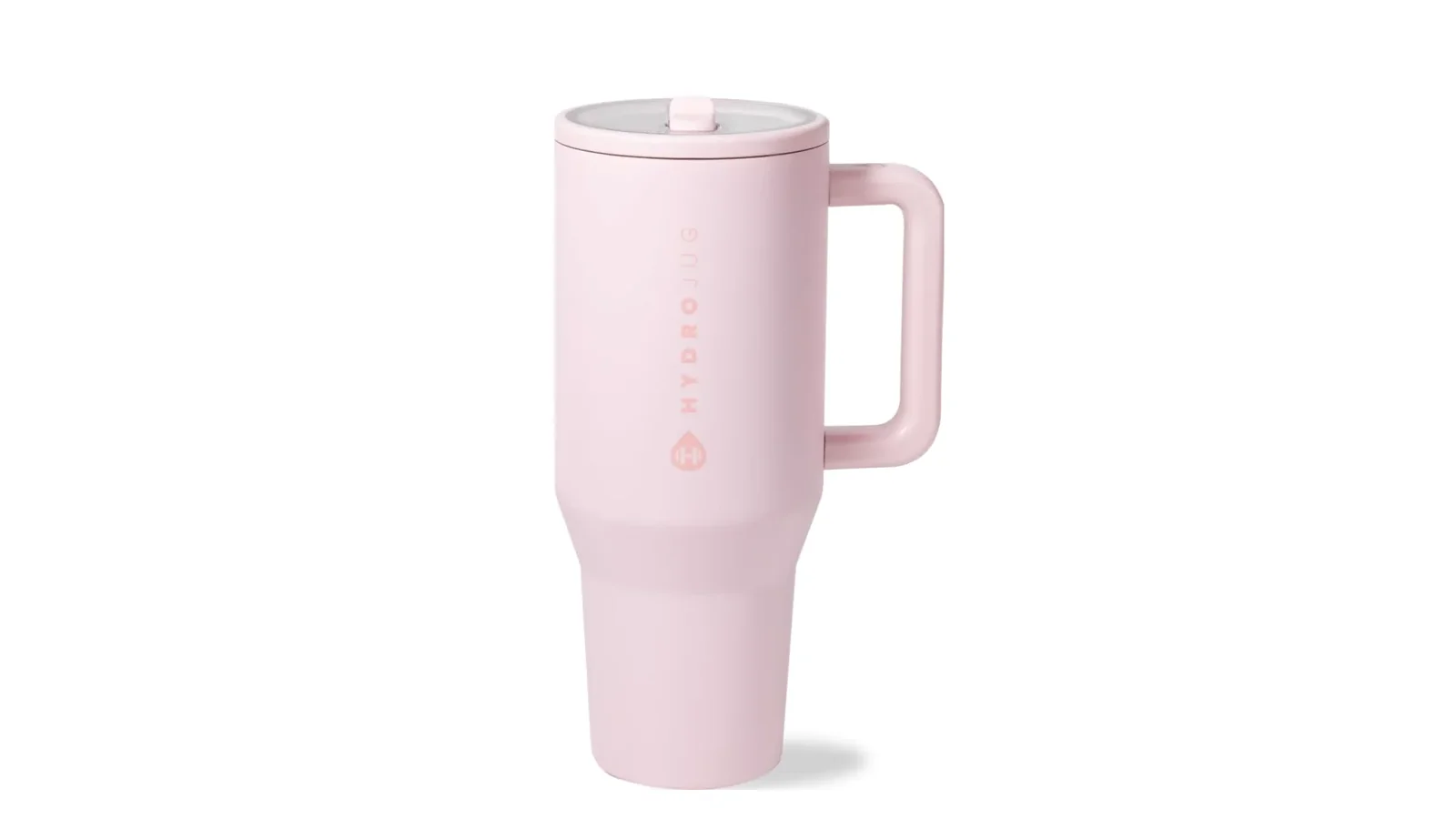
HydroJug Traveler 32oz Review: The Cup-Holder Water Bottle Worth the Counter Space
Flip straw, one-hand drinking, ice that survives an eight-hour cook—this $49 bottle earned its counter space.
The Foodie Apr 15 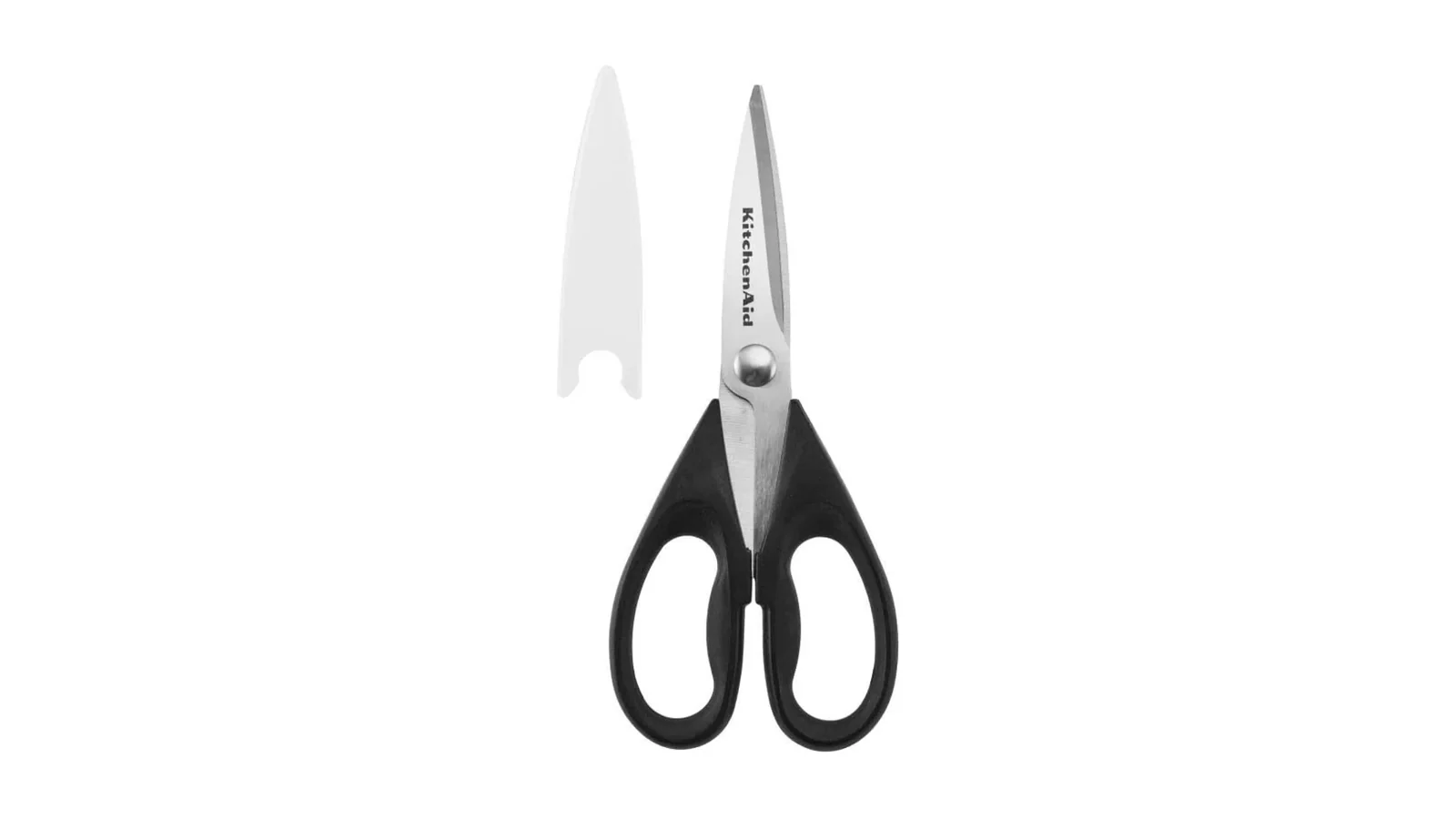
KitchenAid All Purpose Kitchen Shears Review: The $8 Drawer Tool
Spatchcocked a whole chicken in thirty seconds with these eight-dollar shears. The micro-serrated blades bite through skin without slipping.
The Foodie Apr 15